
How to Calm an Anxious Dog at Night
How to Calm an Anxious Dog at Night (Simple Solutions That Work Fast)
Last updated: April 15, 2026
Quick Answer: To calm an anxious dog at night, establish a consistent bedtime routine, make sure your dog gets enough exercise and mental stimulation during the day, and create a safe, comfortable sleep environment. Natural aids like calming music, pheromone diffusers, and gentle massage can help right away. For persistent anxiety, calming supplements or a vet consultation may be needed.
Key Takeaways
- Nighttime anxiety in dogs is extremely common and almost always manageable with the right approach.
- A consistent bedtime routine is one of the most powerful tools you have — dogs thrive on predictability.
- Daytime exercise and mental stimulation directly reduce nighttime restlessness.
- Natural remedies like calming music, lavender aromatherapy (used safely), and pheromone diffusers can ease anxiety fast.
- Calming supplements containing L-theanine, melatonin, or chamomile are effective options for more severe cases.
- Never punish anxious behavior — it makes things significantly worse.
- Anxiety wraps like ThunderShirts can provide immediate relief for many dogs.
- If anxiety is severe, sudden, or worsening, a vet visit is the right next step.
Why Dogs Become Anxious at Night
Dogs can become anxious at night for several reasons, and understanding the root cause is the fastest way to find a solution that actually works. Nighttime anxiety usually comes down to one of four main triggers: separation anxiety, under-stimulation, environmental fear, or routine disruption.
Separation Anxiety
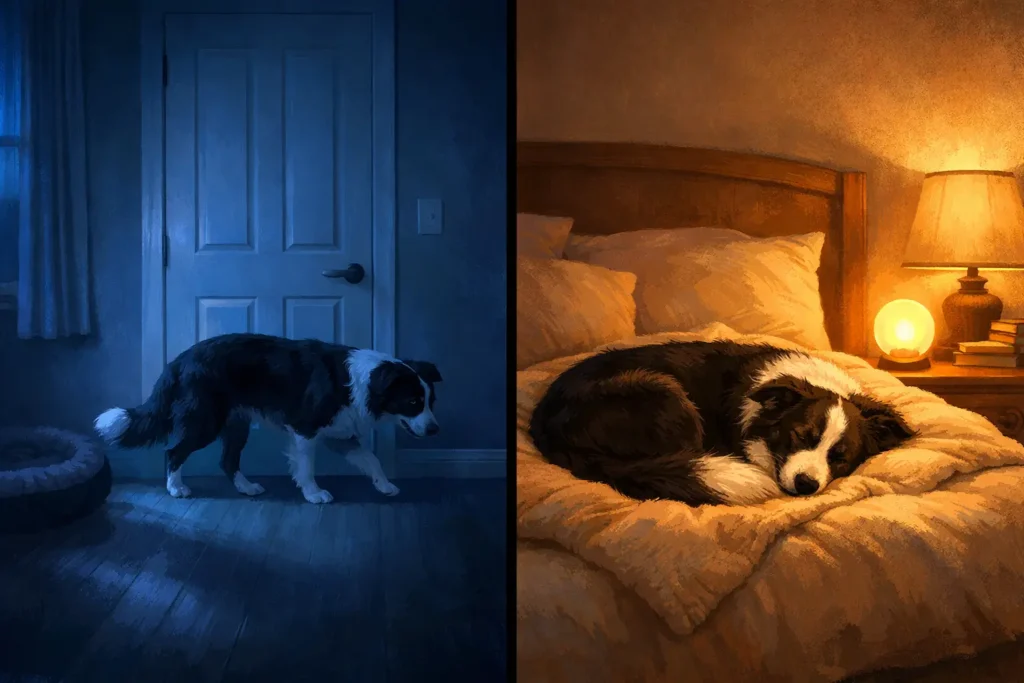
This is one of the most common culprits. When the house goes quiet and everyone retreats to their rooms, some dogs genuinely panic. They’re not being dramatic. For a pack animal, being alone in the dark feels threatening. You might notice your dog scratching at your bedroom door, whining, or pacing the hallway the moment the lights go out. [1]
Not Enough Activity During the Day
A dog that hasn’t burned off energy will find an outlet for it — usually at 11 PM when you’re trying to sleep. Mental and physical under-stimulation during the day is a surprisingly common reason dogs can’t settle at night. [2]
Fear Triggers
Nighttime brings sounds that don’t exist during the day: distant traffic, wind, neighbors coming home late, wildlife outside. Dogs hear at roughly four times the frequency range of humans, so what sounds like background noise to you can feel alarming to them. Darkness itself can also be unsettling, especially for senior dogs experiencing vision changes. [1]
Changes in Routine
Dogs are creatures of habit. A new home, a new family member, a change in your work schedule, or even moving furniture around can be enough to throw off their sense of security and trigger nighttime anxiety. [2]
Signs Your Dog Is Anxious at Night
Anxious dogs rarely suffer quietly. Most owners know something is wrong — they just aren’t always sure if it’s anxiety or something else. Here’s what to look for:
- Pacing or restlessness — can’t settle, keeps changing positions, walks in circles
- Excessive barking or whining — especially if it starts after you’ve gone to bed
- Scratching at doors — trying to get to you or escape a room
- Panting or shaking — even when it isn’t hot
- Yawning repeatedly — a subtle stress signal many owners miss
- Destructive behavior — chewing furniture or bedding during the night
- Clinginess before bedtime — following you everywhere as the evening winds down [7]
If your dog shows several of these signs regularly, you’re almost certainly dealing with nighttime anxiety rather than a one-off bad night. The good news? Most of these behaviors respond well to the strategies below.
How to Calm an Anxious Dog at Night: Proven Solutions
The most effective way to calm an anxious dog at night combines a consistent routine, the right environment, and targeted calming techniques. No single trick works for every dog, but most owners see real improvement within one to two weeks of applying these strategies consistently.
Build a Consistent Bedtime Routine
Dogs don’t read clocks, but they read patterns. When you do the same things in the same order every night, your dog starts to associate those cues with sleep — and that alone can reduce anxiety significantly.
A simple routine might look like this:
- Final walk or potty break at the same time each night
- A small, calming activity (light play or gentle brushing)
- Quiet time in a dim room for 20–30 minutes before bed
- Settling into their sleep space with a familiar blanket or toy
Keep the routine calm and low-energy toward the end. Avoid rough play or exciting activities in the hour before bed. [2]
Exercise and Mental Stimulation During the Day
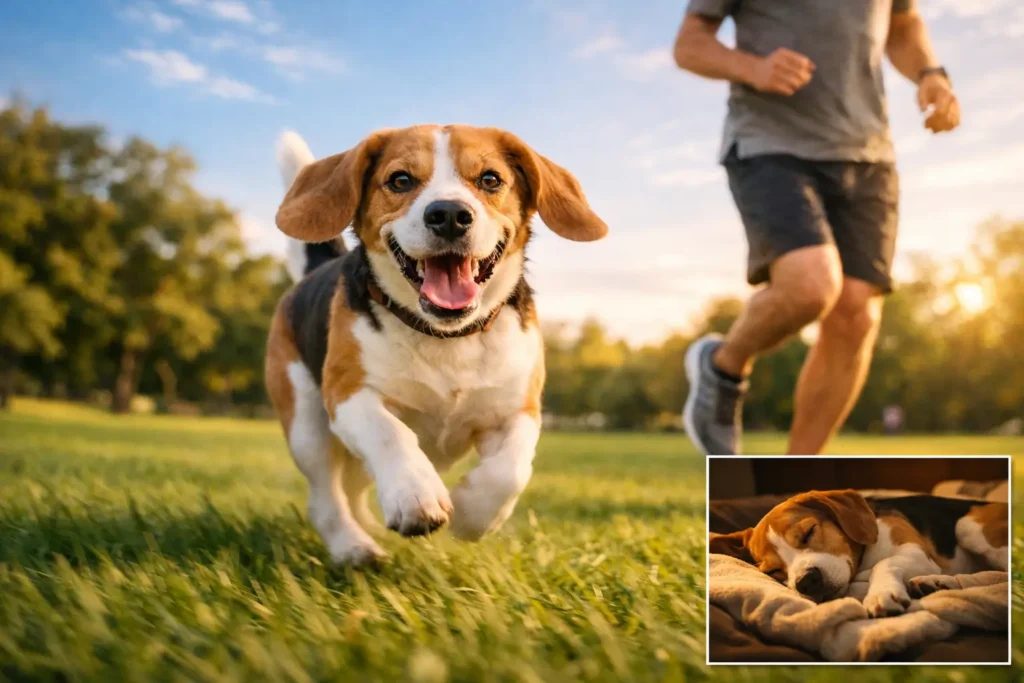
This one is non-negotiable. A tired dog is a calm dog. If your dog is anxious at night, look honestly at how much activity they’re getting during the day.
Beyond walks, try:
- Puzzle feeders at mealtimes
- Scent games (hide treats around the yard)
- Short training sessions — even 10 minutes of learning new commands is mentally exhausting in the best way
- Fetch, agility, or swimming depending on your dog’s breed and fitness [1][2]
High-energy breeds like border collies, huskies, and working dogs especially need this. A 20-minute walk isn’t enough for them.
Create a Safe, Comfortable Sleep Space
Where your dog sleeps matters more than most people think. A crate, when introduced properly, can actually feel like a den — secure and calming rather than restrictive. Line it with a soft blanket that smells like you. Keep it in a spot that isn’t too isolated but also away from high-traffic noise.
If your dog doesn’t use a crate, a dedicated dog bed in a consistent location works just as well. The key is consistency — the same spot, every night. [4][9]
Some dogs also respond well to sleeping closer to you, whether that means their bed is in your room or they sleep on your bed. If that works for your household, there’s no reason to fight it.
Use Touch and Your Voice to Calm Them
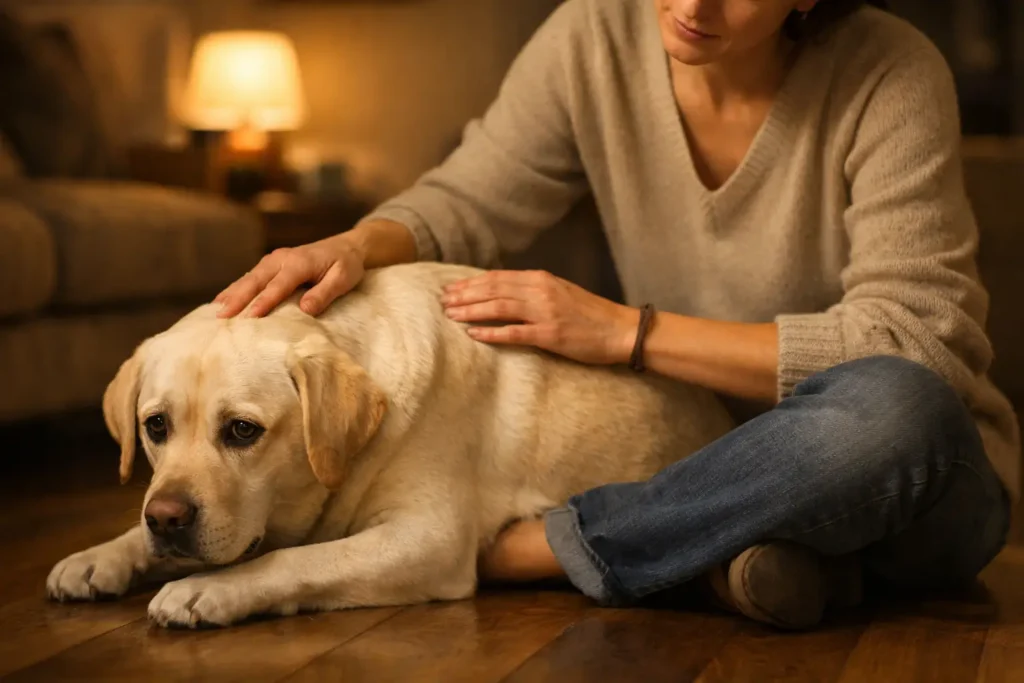
Slow, gentle strokes along your dog’s spine, neck, and shoulders can physically reduce their heart rate and signal that it’s time to relax. This isn’t just anecdotal — massage and deliberate touch release tension in dogs and communicate safety. [1][7]
Your voice matters too. A calm, low, steady tone reassures your dog. Avoid high-pitched or urgent tones, even if you’re frustrated. Dogs pick up on your emotional state faster than you might expect.
Reduce Environmental Triggers
Take a look at your dog’s nighttime environment through their eyes (and ears):
- Is there a streetlight shining into their sleep space? Block it with a curtain.
- Are there sounds — traffic, neighbors, wildlife — that might be startling them? A white noise machine or fan can help mask those.
- Is the temperature comfortable? Dogs that are too warm or too cold won’t settle easily.
Small adjustments to the environment can make a surprisingly big difference. [4]
Natural Remedies That Can Help Calm an Anxious Dog at Night
Several natural approaches can take the edge off nighttime anxiety without medication. These work best alongside behavioral strategies rather than as a replacement for them.
Calming Scents and Pheromone Diffusers
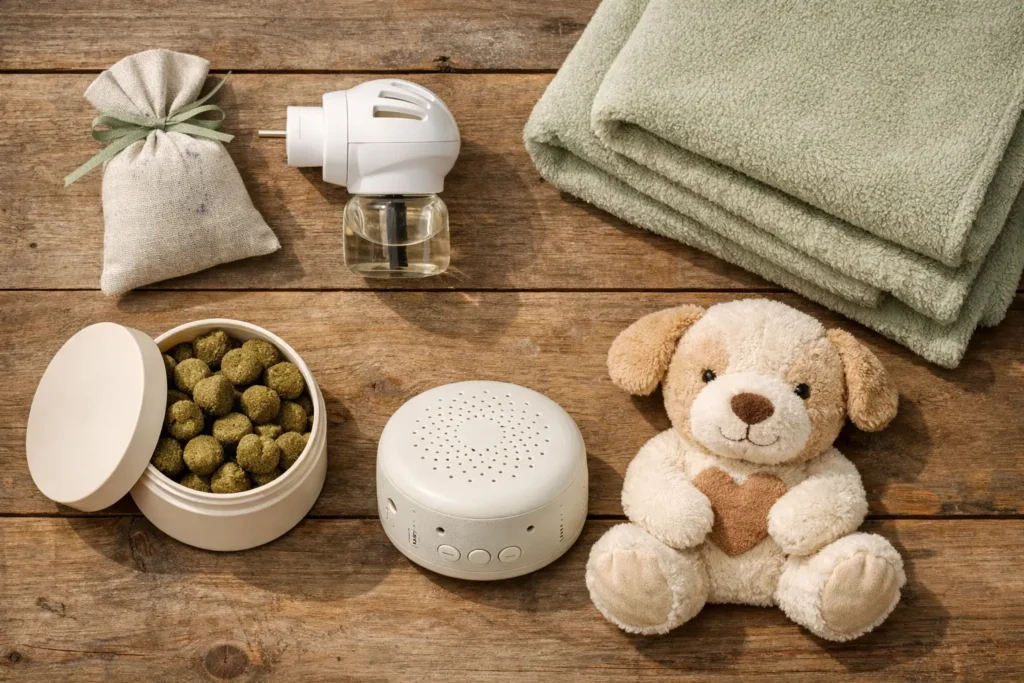
Lavender and Roman chamomile have genuine calming properties when used safely. You can diffuse lavender in the room where your dog sleeps or place a few drops on their bedding (diluted, never directly on skin). That said, essential oils must be used with real caution around pets — some are toxic. Always check with your vet first, and never use a diffuser in a small, unventilated space. [5]
Pheromone diffusers are a safer, more targeted option. Products like Adaptil release synthetic versions of the calming pheromones that mother dogs naturally produce. You plug them into the wall like an air freshener, and they work quietly in the background. Many dog owners report noticeable improvement within a few days. [4]
For a deeper look at pheromone-based products, the calming aids and supplements section at Pet Serenity Hub covers a wide range of options worth exploring.
Calming Music and White Noise
Classical music and specially composed pet-calming music have been shown to reduce stress behaviors in dogs. Studies have found that certain tempos and frequencies are particularly soothing. [5]
You don’t need a special playlist to start. Try:
- A classical music station at low volume
- A white noise machine or app
- A fan running in the background
The goal is to mask sudden, unpredictable sounds — a car door slamming, a neighbor’s dog barking — that might jolt your dog awake and spike their anxiety.
Herbal Supplements and Calming Treats
Chamomile and valerian root are two of the most well-researched herbal options for dog anxiety. They’re available in treat form and can be given before bed without causing grogginess. [2][4]
For faster-acting support, L-theanine (an amino acid found in green tea) and melatonin are worth discussing with your vet. L-theanine works by supporting serotonin and dopamine production. Melatonin can help regulate sleep cycles but must be given at vet-approved doses only — the right amount depends on your dog’s weight and health status. [3]
Nutritional support through L-tryptophan, vitamin B6, and magnesium can also support relaxation over time without causing sedation. [3]
Comfort Items
A snuggle toy with a heartbeat simulator can be a game-changer, especially for puppies or dogs with separation anxiety. These toys mimic the warmth and heartbeat of a littermate and help dogs feel less alone.
Weighted blankets designed for dogs are another option that some owners swear by, particularly for senior dogs who may also be dealing with muscle stiffness or discomfort at night. [2]
When to Consider Calming Products
If natural remedies and routine changes aren’t enough, calming products can provide meaningful additional support — especially when anxiety is frequent, intense, or disrupting both your sleep and your dog’s.
Signs it might be time to try a calming product:
- Your dog’s anxiety happens most nights, not just occasionally
- They’re showing physical signs of stress (panting, shaking, excessive drooling)
- The anxiety has gotten worse over time rather than better
- Nothing in your routine has changed, but the anxiety appeared suddenly
A few categories worth knowing about:
| Product Type | How It Works | Best For |
|---|---|---|
| Pheromone diffusers (e.g., Adaptil) | Mimics calming mother-dog pheromones | General anxiety, separation anxiety |
| Calming chews/treats | Herbal or amino acid-based relaxation support | Mild to moderate anxiety |
| Anxiety wraps (e.g., ThunderShirt) | Gentle pressure mimics swaddling | Storm/noise phobia, general restlessness |
| Calming collars | Slow-release pheromones throughout the day | Dogs that need all-day support |
| Melatonin supplements | Supports sleep cycle regulation | Sleep disruption, senior dogs |
For a comprehensive breakdown of what’s actually worth buying, the best calming aids for dogs in 2026 guide at Pet Serenity Hub is a solid starting point.
Anxiety wraps like the ThunderShirt use gentle, consistent pressure on the torso — similar to swaddling a baby — to reduce anxiety. Many owners put them on their dogs about 30 minutes before bed and report that their dog settles much more quickly. [5][6]
A note on prescription medication: If your dog’s anxiety is severe and nothing else is working, talk to your vet about prescription options. Medications like trazodone or gabapentin are sometimes used for situational anxiety. This isn’t giving up — it’s getting your dog the help they need.
You can also browse product comparisons and reviews to compare specific brands before spending money on something that might not fit your dog’s situation.
Mistakes That Make Dog Anxiety Worse at Night
Knowing what not to do is just as important as knowing what helps. Some well-intentioned responses to nighttime anxiety actually reinforce it or make it worse over time.
Punishing anxious behavior. This is the big one. Yelling at a dog for whining or pacing doesn’t teach them to stop — it adds fear to an already fearful situation. Punishment makes anxiety worse, not better. [7][8]
Inconsistent routines. If bedtime is 9 PM some nights and midnight on weekends, your dog can’t predict what’s coming. That unpredictability itself creates anxiety. Consistency is calming. [2]
Reinforcing anxiety by accident. There’s a difference between comforting your dog and rewarding anxious behavior. If your dog whines and you immediately give them a treat or bring them into your bed, you may be teaching them that whining works. Instead, reward calm behavior — when they’re quiet and settled, that’s when the good stuff happens.
Ignoring early warning signs. A dog that yawns repeatedly, licks their lips, or starts following you obsessively before bed is already showing stress. Catching it early and redirecting with a calm activity is much easier than managing a full anxiety spiral at midnight.
Skipping the vet when something seems off. Sudden nighttime anxiety in an older dog — especially if it comes with confusion, disorientation, or changes in behavior — can sometimes signal a medical issue like cognitive dysfunction syndrome (similar to dementia in humans) or pain. Don’t assume it’s behavioral if the onset was sudden. [6][8]
For more tips on managing pet anxiety day-to-day, the guides and tips for pet owners section has practical resources worth bookmarking.
Quick Tips to Calm Your Dog Tonight
If you’re reading this at 11 PM with a restless dog and you need something you can try right now, here’s a short list of things that can help immediately:
- Put on white noise or soft classical music at low volume near where your dog sleeps.
- Do a slow, 5-minute massage — long strokes down the spine, gentle pressure on the shoulders.
- Give them a worn piece of your clothing to sleep with. Your scent is genuinely calming to them.
- Check the environment — is it too bright, too noisy, too warm? Make one small adjustment.
- Sit with them calmly for 10 minutes without your phone. Your calm presence is one of the most powerful tools you have.
- If you have calming treats on hand, now is a reasonable time to use them — give them 30–45 minutes before you want your dog to be settled.
- Avoid going back and forth — checking on them repeatedly can actually keep them alert. Settle them once, calmly, and then be consistent.
These aren’t long-term fixes on their own, but they can get you through tonight while you work on the bigger picture.
If you’re looking for more immediate product options, the calming aids and supplements page has options that can be ordered quickly and used within days.
Frequently Asked Questions
Q: Why is my dog suddenly anxious at night when they were fine before?
Sudden nighttime anxiety in a previously calm dog often signals a change — in routine, environment, or health. In older dogs especially, sudden behavioral changes can indicate pain or cognitive decline. A vet visit is worth it if the change was abrupt. [6][8]
Q: Should I let my anxious dog sleep in my bed?
There’s no universal right answer. If it helps your dog feel safe and doesn’t disrupt your sleep, it’s a reasonable choice. If it’s reinforcing anxiety or creating dependency, it may be worth gradually transitioning them to their own space nearby.
Q: How long does it take for a bedtime routine to work?
Most dogs show improvement within one to two weeks of a consistent routine. Some respond faster. The key is doing the same things in the same order every night — even on weekends. [2]
Q: Are calming treats safe for dogs?
Most calming treats made with chamomile, L-theanine, or valerian root are safe for healthy adult dogs. Always check the label for dosing instructions and confirm with your vet if your dog has any health conditions or takes medication. [3][4]
Q: Can melatonin help my anxious dog sleep?
Melatonin can help regulate sleep cycles in dogs, but dosage matters a lot. Too much can cause side effects. Always get a vet-recommended dose based on your dog’s weight before trying it. [3]
Q: Do pheromone diffusers actually work?
Many dog owners and vets report positive results with pheromone diffusers like Adaptil, particularly for separation anxiety and general nighttime restlessness. They work best as part of a broader approach rather than a standalone fix. [4]
Q: Is it okay to use lavender around my dog?
Diluted lavender used carefully on bedding or diffused in a well-ventilated room is generally considered safe. However, concentrated essential oils can be toxic to dogs. Always use minimal amounts and consult your vet if you’re unsure. [5]
Q: What if nothing I try is working?
If you’ve tried consistent routines, exercise, environmental adjustments, and calming products for several weeks without improvement, it’s time to talk to your vet. A veterinary behaviorist can also help with complex or severe anxiety cases. [8]
Q: Can puppies have nighttime anxiety too?
Yes, absolutely. Puppies are especially prone to nighttime anxiety because they’re adjusting to a new environment and missing their littermates. A heartbeat toy, a worn piece of your clothing, and a crate near your bed can all help. [9]
Q: Does exercise really make a difference for nighttime anxiety?
Yes — and it’s one of the most underestimated solutions. Dogs that get adequate physical and mental exercise during the day are significantly calmer at night. Think of it as burning off the nervous energy before it surfaces at bedtime. [1][2]
Conclusion
Dealing with a restless, anxious dog at night is exhausting — and it’s easy to feel like you’ve tried everything. But here’s what I want you to take away from this: nighttime anxiety is almost always fixable. It takes consistency, a bit of patience, and the willingness to try a few different approaches until you find what clicks for your dog.
Start with the basics — a predictable bedtime routine, enough daytime exercise, and a comfortable sleep environment. Layer in natural supports like calming music, pheromone diffusers, or herbal supplements if needed. And if things aren’t improving after a few weeks, don’t hesitate to bring your vet into the conversation.
Your dog isn’t trying to make your life difficult. They’re scared, or bored, or confused — and they need your help figuring out that nighttime is safe. With the right approach, both of you can get the rest you deserve.
For more resources on helping anxious pets, explore the tips and guides for pet owners at Pet Serenity Hub — there’s a lot of practical, vet-informed information there to help you along the way.
References
[1] Nighttime Anxiety Pets Causes Comfort Tips – https://www.missionroadanimalclinic.com/nighttime-anxiety-pets-causes-comfort-tips/
[2] Dogs Get Night Anxiety And Sleep Help Tips – https://www.ellicottvets.com/dogs-get-night-anxiety-and-sleep-help-tips/
[3] How Do I Calm My Dog At Night Natural Solutions – https://baileyscbd.com/blogs/dog-health/how-do-i-calm-my-dog-at-night-natural-solutions
[4] Calm Anxious Dog – https://www.becopets.com/blogs/news/calm-anxious-dog
[5] How To Calm Dog Anxiety Naturally – https://verm-x.com/blogs/news/how-to-calm-dog-anxiety-naturally
[6] Senior Dog Anxiety At Night – https://toegrips.com/senior-dog-anxiety-at-night/
[7] Anxious Dog – https://ccspca.com/blog-spca/education/anxious-dog/
[8] Anxious Behavior How Help Your Dog Cope Unsettling Situations – https://www.vet.cornell.edu/departments-centers-and-institutes/riney-canine-health-center/canine-health-topics/anxious-behavior-how-help-your-dog-cope-unsettling-situations
[9] Dog Anxious At Night – https://www.sparkpaws.com/blogs/community/dog-anxious-at-night