
Dog separation anxiety solutions that work
Dog Separation Anxiety Solutions That Actually Work in 2026
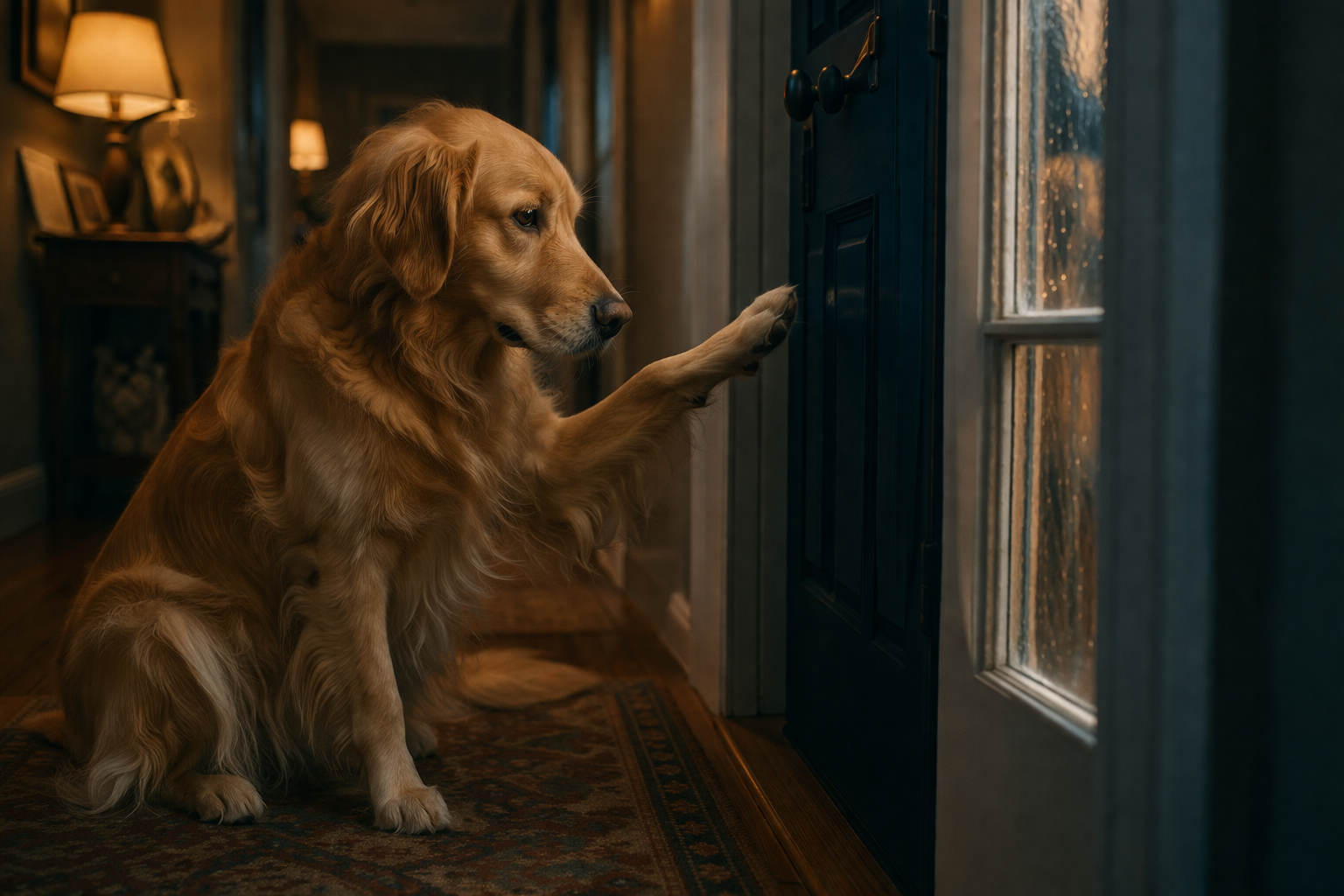
Last updated: May 2, 2026
Quick Answer: The most effective dog separation anxiety solutions combine systematic desensitization (very short, gradual alone-time practice) with counterconditioning (pairing your departure with something your dog loves). For moderate to severe cases, veterinary-prescribed medication alongside behavior modification significantly improves outcomes. There’s no overnight fix, but with consistent effort, most dogs improve meaningfully within weeks to months.
Key Takeaways
- Separation anxiety is a genuine panic response, not bad behavior or spite
- Problem behaviors can start as early as 3 minutes after you leave, so initial training sessions must be extremely brief [4]
- Systematic desensitization (gradually increasing alone time) is the gold-standard treatment [4]
- Always keep your dog “sub-threshold” during training — if they’re panicking, the session is too long
- Exercise and mental stimulation before you leave can reduce anxiety severity [2]
- Pheromone diffusers (dog-appeasing pheromone) can be as effective as medication when combined with behavior modification [4]
- Medication like fluoxetine takes 4–8 weeks to show full effect and works best alongside training [2]
- Kong toys stuffed with treats help dogs build positive associations with alone time [5]
- Professional help from a veterinary behaviorist gives better results than going it alone [4]
- Punishment never helps — it makes anxiety worse
What Is Dog Separation Anxiety (and Is That Really What Your Dog Has)?
Dog separation anxiety is a panic disorder, not a training problem. When a dog with true separation anxiety is left alone, their brain triggers a genuine fear response — similar to a human panic attack. This is different from a bored dog who chews your shoes or a dog who wasn’t properly house-trained.
Signs that point to separation anxiety specifically:
- Destructive behavior that happens only when you’re gone
- Excessive barking, whining, or howling shortly after departure
- House soiling despite being fully house-trained
- Pacing, drooling, or trembling near exits
- Frantic greeting behavior when you return
- Attempts to escape (sometimes causing self-injury) [7]
Signs that suggest something else:
| Behavior | Separation Anxiety | Boredom/Under-stimulation |
|---|---|---|
| Timing | Only when alone | Anytime |
| Destruction target | Often doors/windows | Random objects |
| Intensity | Escalates quickly | Stays moderate |
| Response to exercise | Reduces symptoms | Largely resolves it |
| Needs medication | Sometimes | Rarely |
If you’re unsure, set up a phone camera or pet cam and record what your dog does in the first 30 minutes after you leave. The footage will tell you a lot. [8]
A note from experience: I once assumed my neighbor’s Lab was “just dramatic.” The video she showed me — 45 seconds of howling followed by frantic scratching at the door — changed my mind immediately. That dog was genuinely distressed, not performing.
Why Do Dogs Develop Separation Anxiety?
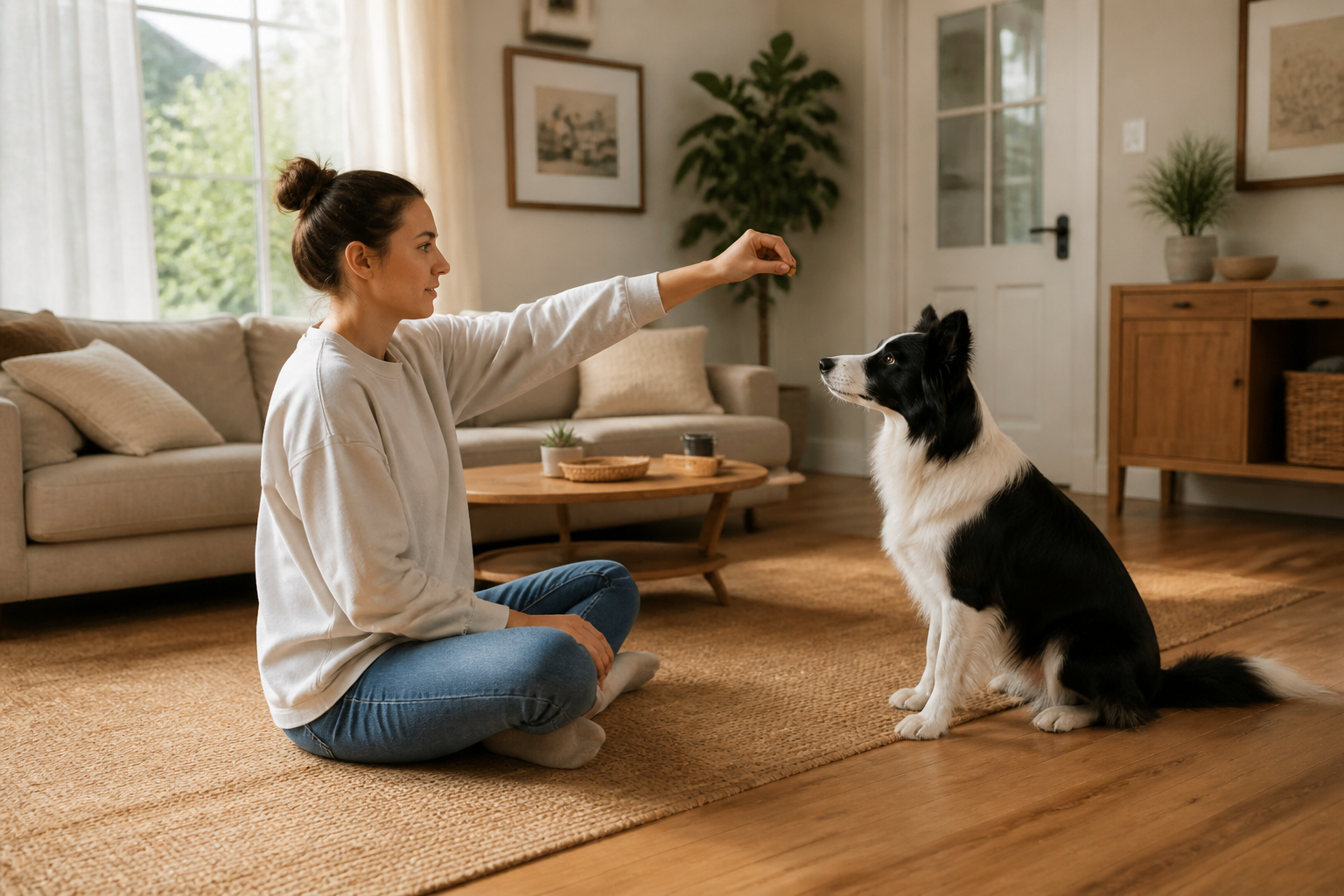
Separation anxiety doesn’t have a single cause, and that matters because the trigger can shape your approach to solving it.
Common triggers include:
- A sudden change in schedule (returning to office after working from home)
- A new home or rehoming from a shelter
- Loss of a family member or another pet
- A traumatic event that occurred while alone
- Puppies who were never taught to be alone [8]
Some breeds are more prone to it — working breeds, herding dogs, and dogs bred for close human companionship tend to be higher risk. But any dog can develop it. [9]
The key thing to understand: separation anxiety is learned. Your dog has associated your departure with distress. That means it can also be unlearned — which is the entire basis of the behavior modification strategies below.
Dog Separation Anxiety Solutions: The Behavior Modification Approach
The most evidence-backed dog separation anxiety solutions center on two techniques used together: systematic desensitization and counterconditioning. [4]
Systematic Desensitization: Start Smaller Than You Think
The goal is to expose your dog to being alone in such tiny increments that they never reach the panic threshold.
Here’s how to start:
- Begin with pre-departure cues only. Pick up your keys, put on your shoes, grab your bag — then sit back down. Repeat until your dog stops reacting. This alone can take several days.
- Step outside for 5 seconds. Come back in calmly. No big hellos.
- Gradually extend the time — 10 seconds, 30 seconds, 1 minute, 3 minutes, 5 minutes. [1]
- Never push past the point of stress. If your dog starts whining or pacing, you’ve gone too long. Drop back to a duration they handled well.
- Build to 30–45 minutes before extending to longer absences. [1]
Research shows that problem behaviors like vocalization can begin as early as 3 minutes and 15 seconds after departure, and destruction as early as 7 minutes. [4] That’s why starting with seconds — not minutes — matters.
“The dog must not exhibit stress behaviors during the training process. If they panic, reduce the duration rather than pushing through.” [2]
Counterconditioning: Make Leaving a Good Thing
Counterconditioning pairs your departure with something your dog loves, so over time, leaving the house becomes a signal for something good rather than something scary. [4]
Practical ways to do this:
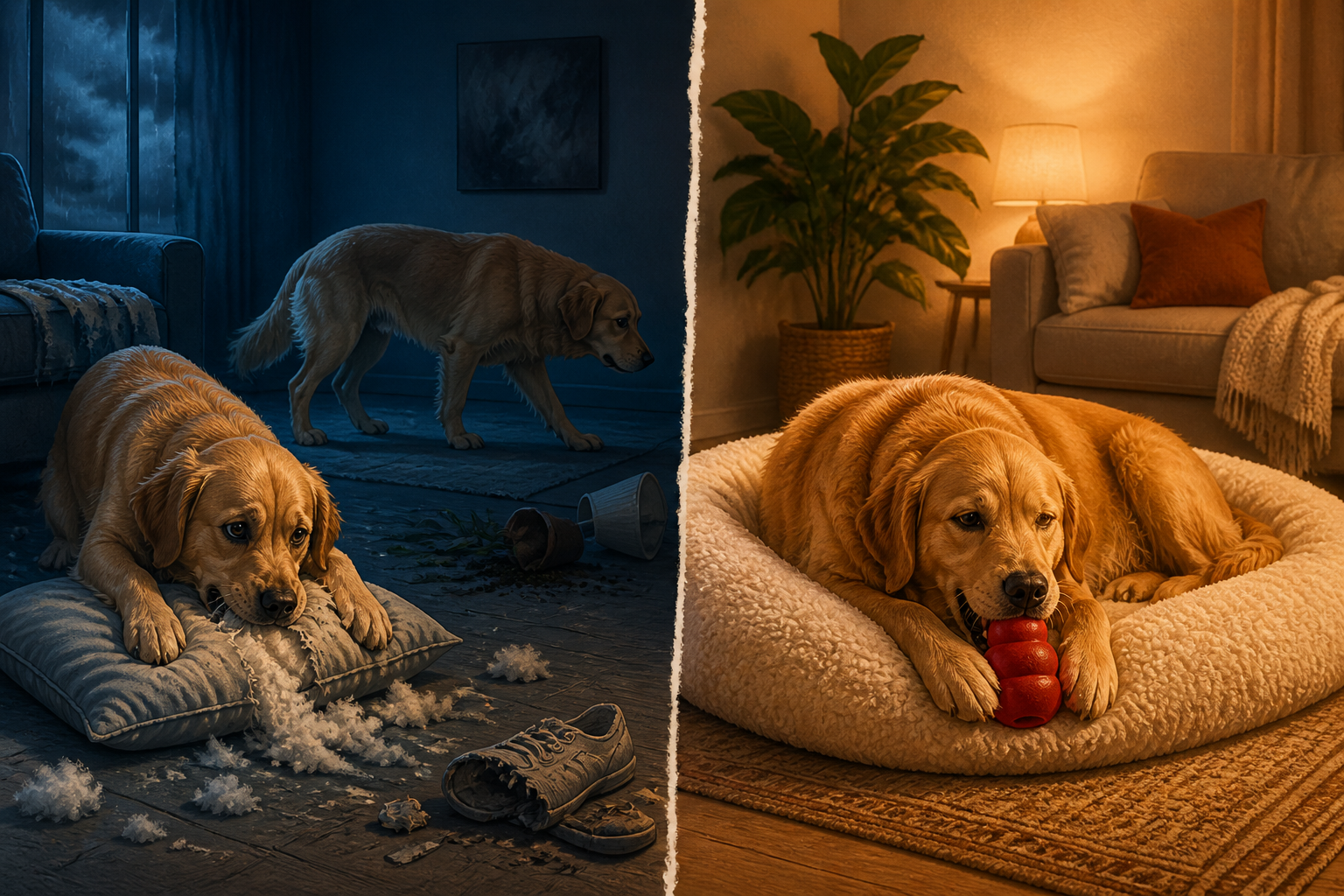
- Give a stuffed Kong toy (frozen peanut butter or wet food works well) only when you leave. Take it away when you return. This creates a positive association and keeps your dog occupied. [5]
- Use a puzzle feeder or a lick mat during your practice departures.
- Keep arrivals and departures calm and low-key. Dramatic goodbyes increase anxiety.
For more product ideas that support this approach, check out our guide to calming aids and supplements for dogs.
What Tools and Products Actually Help?
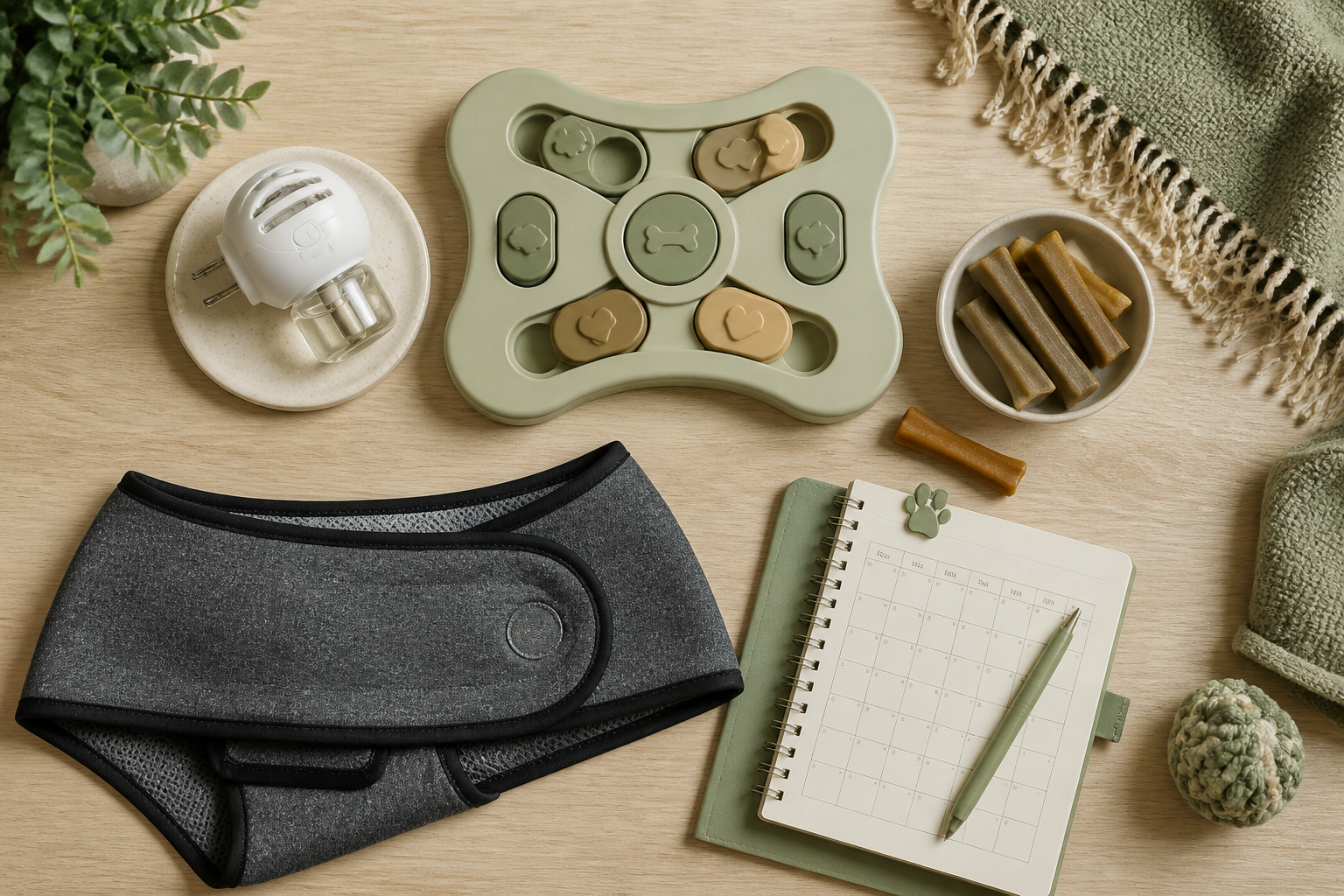
Behavior modification is the foundation, but several tools can support the process — especially in the early stages.
Dog-Appeasing Pheromone (DAP) Diffusers
These plug-in diffusers release a synthetic version of the calming pheromone mother dogs produce when nursing. A peer-reviewed study found DAP diffusers to be at least as effective as clomipramine (a prescription anti-anxiety medication) when combined with behavior modification, with fewer side effects. [4]
They work best when used consistently in the space where your dog spends most of their time alone.
Calming Supplements
Products containing L-theanine, melatonin, or casein protein have some evidence behind them for mild anxiety. They won’t resolve moderate or severe separation anxiety on their own, but they can take the edge off during training. See our best calming aids for dogs in 2026 roundup for a vetted list.
Puzzle Toys and Enrichment
Mental stimulation before you leave can significantly reduce how wound up your dog is when you walk out the door. [2] Scent games like “find the treat” hidden around the house, a 20-minute sniff walk, or a puzzle feeder at breakfast all help.
Compression Wraps (Thunder Shirts)
These work well for some dogs, particularly those with noise-related anxiety alongside separation anxiety. The evidence is mixed, but they’re low-risk and worth trying.
Choose the tool based on severity:
- Mild anxiety: Enrichment, puzzle toys, DAP diffuser, calming supplements
- Moderate anxiety: All of the above + structured desensitization training
- Severe anxiety: All of the above + veterinary consultation for medication
Dog Separation Anxiety Solutions: When to Consider Medication
Medication isn’t a last resort — for moderate to severe cases, it’s often what makes behavior modification possible in the first place. A dog in full panic can’t learn. Medication lowers the baseline anxiety enough that training can actually stick.
Long-Term Medications
Fluoxetine (Prozac for dogs) and clomipramine are the two most commonly prescribed options.
- Fluoxetine takes 4–8 weeks to reach full effect and requires annual blood work monitoring. [2]
- Clomipramine at 1 mg/kg every 12 hours reduces pacing, scratching, and whining. Increasing to 2 mg/kg every 12 hours further reduces barking and increases calm resting time. [4]
These are not sedatives. They reduce baseline anxiety without making your dog drowsy or zombie-like.
Situational Medications
Trazodone and similar drugs work faster and are useful when you have a known stressful event coming up (a long workday, a trip). They’re most effective when combined with training so the dog has a positive experience during the trigger event. [2]
Talk to your vet if:
- Your dog injures themselves trying to escape
- Behavior modification alone hasn’t helped after 4–6 weeks of consistent effort
- The anxiety is severe enough that your dog can’t settle even for a few minutes
For a broader look at calming options across species and anxiety types, our guides and tips for pet owners covers the landscape well.
The Role of Exercise and Daily Routine
This is one of the most underrated dog separation anxiety solutions, especially for mild to moderate cases.
A tired dog is a calmer dog. Physical exercise before you leave — even a 20–30 minute brisk walk — can meaningfully reduce how intensely your dog reacts to your departure. [2] Combine that with a mental enrichment activity (a sniff walk, a training session, a puzzle feeder) and you’ve addressed two of the biggest drivers of anxiety: pent-up energy and boredom.
A simple pre-departure routine that helps:
- Walk or play session (20–30 minutes)
- Breakfast via puzzle feeder or scatter feeding
- Short training session (5 minutes of basic commands)
- Calm, low-key goodbye
- Leave the Kong or lick mat as you go
Consistency matters as much as the activities themselves. Dogs thrive on predictable routines, and knowing what comes next reduces ambient anxiety throughout the day.
Common Mistakes That Make Separation Anxiety Worse
Even well-meaning owners accidentally reinforce anxiety. Here are the patterns to watch for:
Mistake 1: Dramatic departures and arrivals
Long, emotional goodbyes signal to your dog that leaving is a big deal. Keep it matter-of-fact.
Mistake 2: Pushing through panic during training
If your dog is already spiraling, continuing the session doesn’t build tolerance — it reinforces the fear response. Always train below the anxiety threshold. [2]
Mistake 3: Getting another dog to “fix” the anxiety
This sometimes helps if the dog is lonely rather than anxious, but true separation anxiety is about your absence specifically. A second dog often doesn’t resolve it. [7]
Mistake 4: Crating a dog who panics in crates
A crate can help some dogs feel safe, but for dogs with severe separation anxiety, being confined can escalate panic and lead to injury. [7]
Mistake 5: Expecting fast results
Systematic desensitization takes weeks to months of consistent daily practice. Progress is usually nonlinear — good days followed by setbacks are normal.
When to Call a Professional

Owner-administered training works, but programs guided by a certified professional have better success rates. [4] Consider reaching out if:
- Your dog is injuring themselves
- You’ve been consistent for 6+ weeks with no improvement
- The anxiety is affecting your dog’s ability to eat, sleep, or function normally
- You’re not sure whether what you’re seeing is separation anxiety or something else
Who to contact:
- Certified Applied Animal Behaviorist (CAAB) or Veterinary Behaviorist (DACVB): Best for severe cases
- Certified Professional Dog Trainer (CPDT-KA): Good for mild to moderate cases with behavioral support
- Your veterinarian: First stop for ruling out medical causes and discussing medication options
You can also explore our product comparisons and reviews to find tools that complement professional guidance.
FAQ:
Q: How long does it take to treat dog separation anxiety?
Mild cases can improve in 2–4 weeks with consistent training. Moderate to severe cases typically take 2–6 months, especially if medication is involved. There’s no reliable shortcut.
Q: Can separation anxiety go away on its own?
Rarely. Without intervention, it usually stays the same or gets worse over time. Active behavior modification is needed for lasting improvement. [8]
Q: Is crating helpful for separation anxiety?
It depends on the dog. Some find crates comforting; others panic more when confined. Watch your dog’s response carefully. Never crate a dog who is actively trying to escape — injury risk is high. [7]
Q: Do calming treats actually work for separation anxiety?
For mild anxiety, calming supplements can take the edge off and support training. They won’t resolve moderate or severe separation anxiety on their own. Think of them as a helpful addition, not a standalone solution.
Q: Should I get a second dog to help with separation anxiety?
Not as a primary strategy. True separation anxiety is triggered by the absence of specific people, not general loneliness. A second dog may help with boredom-related issues but typically doesn’t resolve genuine separation anxiety. [7]
Q: Can puppies develop separation anxiety?
Yes. Puppies who are never taught to be alone are at higher risk. Early alone-time training (starting with very short periods from puppyhood) is one of the best preventive steps you can take. [8]
Q: What’s the difference between separation anxiety and boredom?
Boredom-related behavior tends to happen anytime the dog is under-stimulated. Separation anxiety is specifically triggered by being left alone and typically involves distress signals (panting, pacing, howling) within the first few minutes of departure.
Q: Is fluoxetine safe for dogs long-term?
Fluoxetine is FDA-approved for use in dogs with separation anxiety. Long-term use requires annual blood work to monitor organ function. Your vet will guide the dosing and monitoring schedule. [2]
Q: Can I use a dog camera to help with training?
Absolutely. A camera lets you monitor your dog’s actual behavior during practice sessions so you can adjust duration accurately. It’s one of the most useful tools for desensitization training.
Q: What if my dog only has anxiety with one specific person?
This is called hyper-attachment. The training approach is the same (desensitization), but you may also need to work on reducing the dog’s dependence on that specific person by having others handle feeding, walks, and playtime. [9]
Conclusion: A Practical Path Forward
Dog separation anxiety is stressful for both of you — but it’s genuinely treatable. The most effective dog separation anxiety solutions aren’t complicated, but they do require patience and consistency.
Here’s where to start this week:
- Set up a camera and watch what your dog actually does in the first 30 minutes after you leave.
- Start desensitization practice with departures measured in seconds, not minutes.
- Get a Kong or puzzle toy and use it exclusively during practice sessions.
- Book a vet appointment if the anxiety is severe or if you’ve been trying for weeks without progress.
- Consider a DAP diffuser as a low-risk, evidence-backed supplement to training.
The goal isn’t a dog who never misses you. It’s a dog who can handle your absence without suffering. That’s entirely achievable — and your dog is counting on you to get there.
For more resources on keeping your pet calm and comfortable, browse the Pet Serenity Hub blog for guides, product reviews, and expert-backed tips.
References
[1] 7 Steps to Help Settle Separation Anxiety for Your Dog – https://sanmateoveter.com/services/dogs/blog/7-steps-help-settle-separation-anxiety-your-dog
[2] How to Help a Dog With Separation Anxiety – https://www.petmd.com/dog/training/how-help-dog-separation-anxiety
[3] Managing Your Dog’s Separation Anxiety – https://clickertraining.com/managing-your-dogs-separation-anxiety/
[4] Canine Separation Anxiety: Strategies for Treatment and Management – https://pmc.ncbi.nlm.nih.gov/articles/PMC7521022/
[5] How to Ease Your Dog’s Separation Anxiety – https://www.webmd.com/pets/dogs-separation-anxiety
[6] Help Your Dog With Separation Anxiety – https://kindnessoftulsa.com/blog/help-your-dog-with-separation-anxiety/
[7] Separation Anxiety (ASPCA) – https://www.aspca.org/pet-care/dog-care/common-dog-behavior-issues/separation-anxiety
[8] Separation Anxiety in Dogs: Causes, Signs and Solutions – https://bestfriends.org/pet-care-resources/separation-anxiety-dogs-causes-signs-and-solutions
[9] Separation Anxiety in Dogs – https://www.pawschicago.org/news-resources/all-about-dogs/understanding-dog-behavior/help-with-canine-behavior-challenges/separation-anxiety-in-dogs
Meta Title: Dog Separation Anxiety Solutions That Actually Work
Meta Description: Discover proven dog separation anxiety solutions in 2026 — from systematic desensitization and counterconditioning to medication and calming tools that really help.
Tags: dog separation anxiety, separation anxiety solutions, dog anxiety treatment, canine anxiety, systematic desensitization dogs, dog calming aids, dog behavior modification, anxious dog, dog separation anxiety medication, counterconditioning dogs, dog training tips, pet anxiety relief