
Best Calming Products for Dog Anxiety (What Actually Works in 2026)
Best Calming Products for Dog Anxiety
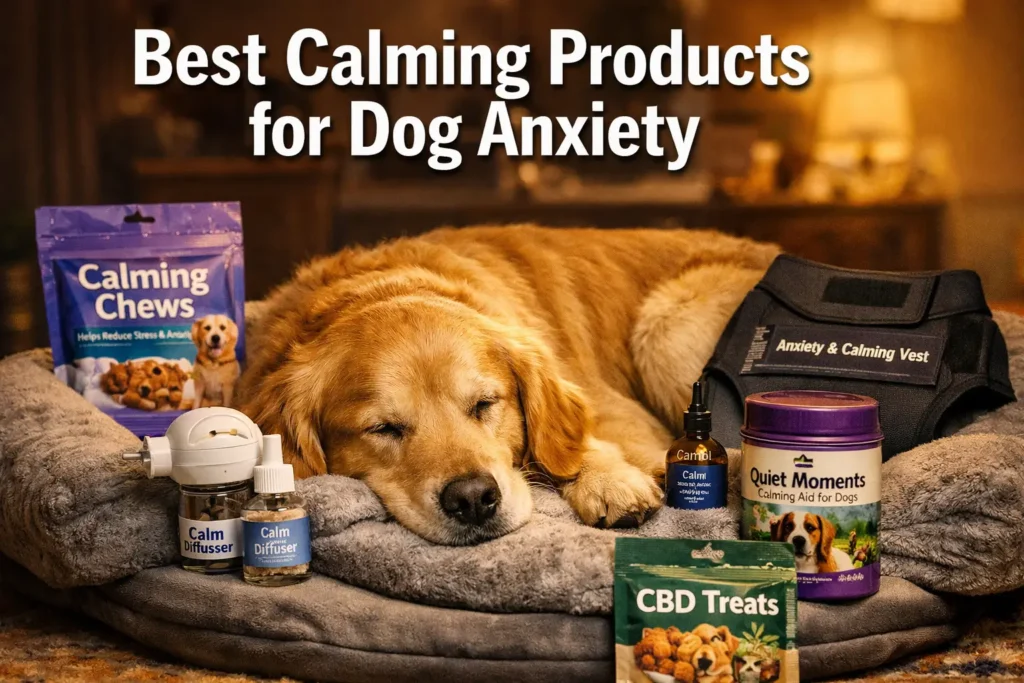
Last updated: April 15, 2026
Quick Answer: The most effective calming products for dog anxiety combine pheromone diffusers, calming treats with proven ingredients like L-theanine or melatonin, and anxiety wraps. No single product works for every dog or every situation, but starting with one or two targeted options based on your dog’s specific triggers gives you the best chance of seeing real results.
Key Takeaways
- Pheromone diffusers (like Adaptil) are among the most consistently effective options for general anxiety and separation stress
- Calming treats work best when given 30–60 minutes before a known stressor, not after anxiety has already peaked
- Anxiety wraps like the ThunderShirt show strong anecdotal success for noise phobias and travel stress
- Most products need 2–4 weeks of consistent use before you can fairly judge whether they’re working
- Matching the product to the trigger (storms, separation, vet visits) matters more than picking the most popular brand
- Natural supplements with L-theanine, ashwagandha, or melatonin are worth trying before moving to prescription options
- Combining two complementary methods (for example, a diffuser plus calming treats) often works better than one alone
- If anxiety is severe or worsening, consult a veterinarian or a certified animal behaviorist — products alone won’t fix deep-rooted fear responses
Why Most Dog Anxiety Products Don’t Work
The honest answer: most products don’t fail because they’re bad. They fail because dog owners use the wrong product for the situation, expect results overnight, or use calming aids in isolation without addressing the routine or environment.
Here’s what typically goes wrong:
Wrong product for the trigger. A calming collar might help with mild daily stress but do almost nothing for a dog with a severe thunderstorm phobia. A pheromone diffuser is great for home-based separation anxiety but won’t help at the vet clinic. Matching the product to the specific trigger is step one.
Expecting instant results. Calming treats with natural ingredients like L-theanine or chamomile are not sedatives. They work subtly, and many need to build up in your dog’s system over days or weeks. Owners often try a product twice, see no dramatic change, and give up. Most supplements need a minimum two-week consistent trial to be fairly evaluated.
Using products as a standalone fix. A calming chew won’t undo months of reinforced anxious behavior. Products work best alongside consistent routines, positive reinforcement training, and sometimes environmental changes. Think of them as support tools, not solutions on their own.
Types of Calming Products (Quick Breakdown)
Before getting into specific product picks, here’s a fast overview of the main categories and what each one is actually good for.
Calming Treats and Chews
These are the most popular entry point for most dog owners. They typically contain ingredients like melatonin, L-theanine, chamomile, valerian root, or hemp extract. They’re easy to give, dogs usually love them, and they’re affordable. Best for: mild to moderate anxiety, situational stress (car rides, vet visits, fireworks).
Pheromone Collars and Diffusers
These products mimic the calming pheromones that mother dogs produce to comfort their puppies. Adaptil is the most studied brand in this category. Diffusers plug into the wall and work continuously in a room; collars release pheromones close to the dog’s nose throughout the day. Best for: separation anxiety, new environments, multi-dog households.
Anxiety Wraps
Snug-fitting garments like the ThunderShirt apply gentle, constant pressure to a dog’s torso, which appears to have a calming effect similar to swaddling in infants. No drugs or supplements involved. Best for: noise phobias (thunder, fireworks), travel anxiety, vet visits.
Supplements
These are more concentrated than treats and often come in capsule or powder form. Some contain similar ingredients to calming treats but at higher doses. Others include probiotics (since gut health is increasingly linked to anxiety in dogs) or targeted amino acids. Best for: dogs with ongoing moderate-to-severe anxiety who need consistent daily support.
Calming Sprays
Sprays can be used directly on bedding, in the car, or on a bandana around the dog’s neck. They’re convenient for travel or one-off situations. Best for: quick situational use when you don’t have time for treats to kick in.
Best Calming Products for Dog Anxiety (Top Picks)
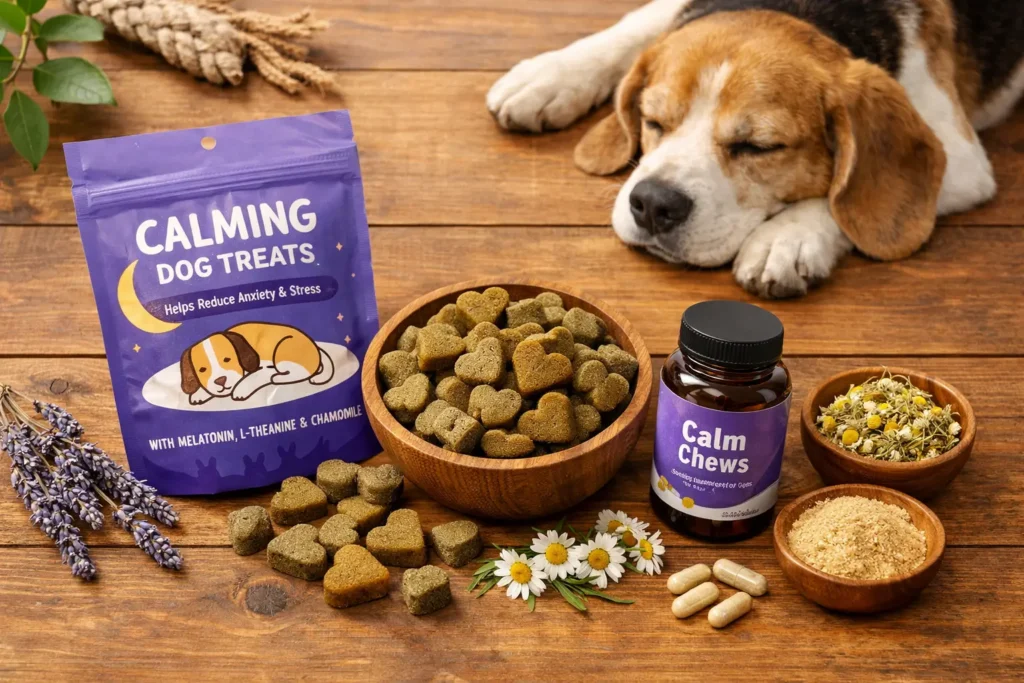
Since this guide is built around helping you make a real decision, here are the top-performing product types and specific picks that dog owners and veterinary professionals consistently recommend. Where specific products are mentioned, they reflect widely available, well-reviewed options as of 2026.
1. Adaptil Calm Home Diffuser
Best for: Separation anxiety, puppies adjusting to a new home, multi-dog households
Adaptil is the most clinically studied pheromone product for dogs. The diffuser plugs into any standard outlet and covers up to 700 square feet. It releases a synthetic version of the dog-appeasing pheromone (DAP) that nursing mother dogs produce. It won’t sedate your dog, but many owners notice a measurable reduction in pacing, whining, and destructive behavior within 7–14 days of continuous use.
✅ Pros: No drugs or supplements, works passively 24/7, backed by more research than most competitors, safe for all dog ages and breeds
❌ Cons: Takes 1–2 weeks to show results, only effective in the room where it’s plugged in, refills add ongoing cost (~$20–25 per month)
Choose this if: Your dog shows anxiety primarily at home, especially when left alone.
2. ThunderShirt Classic Anxiety Vest
Best for: Noise phobias, travel anxiety, vet visits
The ThunderShirt is one of the few calming products with a satisfaction guarantee and a large base of verified user reviews. The snug wrap applies gentle, constant pressure across the dog’s chest and torso. It’s drug-free, reusable, and works within minutes of putting it on. It’s not effective for every dog, but for noise-sensitive dogs, it’s often the fastest-acting option available without a prescription.
✅ Pros: Drug-free, immediate effect (no waiting for it to kick in), machine washable, available in sizes for all breeds, money-back guarantee
❌ Cons: Doesn’t work for all dogs, can be tricky to put on correctly at first, not a solution for deep-rooted behavioral anxiety
Choose this if: Your dog panics during thunderstorms, fireworks, or car rides.
3. Zesty Paws Calming Bites
Best for: Mild to moderate situational anxiety, dogs who are treat-motivated
These soft chews contain L-theanine, suntheanine, and thiamine (Vitamin B1), ingredients that support relaxation without sedation. They’re one of the most purchased calming treats in the US market and have strong reviews for travel stress and general nervousness. Give them 30–60 minutes before the anticipated stressor for best results.
✅ Pros: Palatable (most dogs eat them willingly), affordable, no prescription needed, good ingredient transparency
❌ Cons: Results vary significantly between dogs, not strong enough for severe anxiety, some dogs experience mild digestive upset
Choose this if: Your dog has mild anxiety around specific events like car rides, grooming, or visitors.
4. VetriScience Composure Pro
Best for: Dogs with moderate anxiety who need something stronger than basic treats
Composure Pro is a step up from standard calming chews. It contains a higher dose of Colostrum Calming Complex, L-theanine, and thiamine. It’s often recommended by veterinarians as a first step before considering prescription medication. Available in regular and pro-strength formulas.
✅ Pros: Veterinarian-recommended, higher potency than most OTC chews, works for both dogs and cats
❌ Cons: More expensive than basic calming treats, still requires consistent use to see full effect
Choose this if: Basic calming treats haven’t worked and you want something stronger before going the prescription route.
5. Adaptil Calm On-the-Go Collar
Best for: Dogs who need pheromone support outside the home
The collar version of Adaptil is useful when a diffuser isn’t practical — travel, boarding, outdoor events. It releases DAP pheromones continuously for up to 30 days. Because it’s worn directly on the dog, the pheromones stay close to the dog’s nose regardless of location.
✅ Pros: Portable, continuous release, no need for electricity, good for dogs who travel or board frequently
❌ Cons: Needs to be replaced monthly, can get wet and lose effectiveness, not as studied as the diffuser version
Choose this if: Your dog’s anxiety isn’t limited to home and you need something that travels with them.
6. NaturVet Quiet Moments Calming Aid
Best for: Budget-conscious owners looking for a reliable daily supplement
NaturVet’s Quiet Moments is one of the most affordable calming supplements on the market without sacrificing ingredient quality. It contains melatonin, thiamine, L-tryptophan, and chamomile. It’s a solid starting point for owners who want to try a calming supplement without spending a lot upfront.
✅ Pros: Very affordable, widely available (most pet stores carry it), good for daily use or situational use
❌ Cons: Melatonin dosing can vary by dog size, not the strongest formula available, mild effect for severe anxiety cases
Choose this if: You want an affordable, low-risk starting point for mild anxiety.
7. Rescue Remedy Pet (Bach Flower Formula)
Best for: Owners who prefer a natural, homeopathic approach
Rescue Remedy Pet is a liquid formula added to water or applied to gums or paws. It’s based on Bach flower remedies and has a loyal following among holistic pet owners. The evidence base is limited compared to pheromone products or supplements with studied ingredients, but many owners report noticeable calming effects for mild stress.
✅ Pros: Completely natural, alcohol-free version available for pets, easy to administer, very affordable
❌ Cons: Limited clinical evidence, effect is subtle, not appropriate for moderate-to-severe anxiety
Choose this if: Your dog has very mild anxiety and you prefer a natural, minimal-ingredient approach.
8. Solliquin Soft Chews (Nutramax)
Best for: Dogs with ongoing moderate anxiety who need a vet-quality supplement
Solliquin is made by Nutramax, a company known for producing veterinary-grade supplements. It contains L-theanine, Magnolia/Phellodendron extract, and whey protein concentrate. It’s one of the more research-backed OTC options and is often recommended by vets as a complement to behavioral modification.
✅ Pros: Veterinary-grade formulation, well-tolerated, good for long-term daily use, available in small and large dog sizes
❌ Cons: More expensive than basic chews, takes 4–6 weeks for full effect, not available in all pet stores (often ordered online or through vets)
Choose this if: You want a vet-quality supplement for a dog with persistent, ongoing anxiety.
What Works Fastest for Most Dog Owners
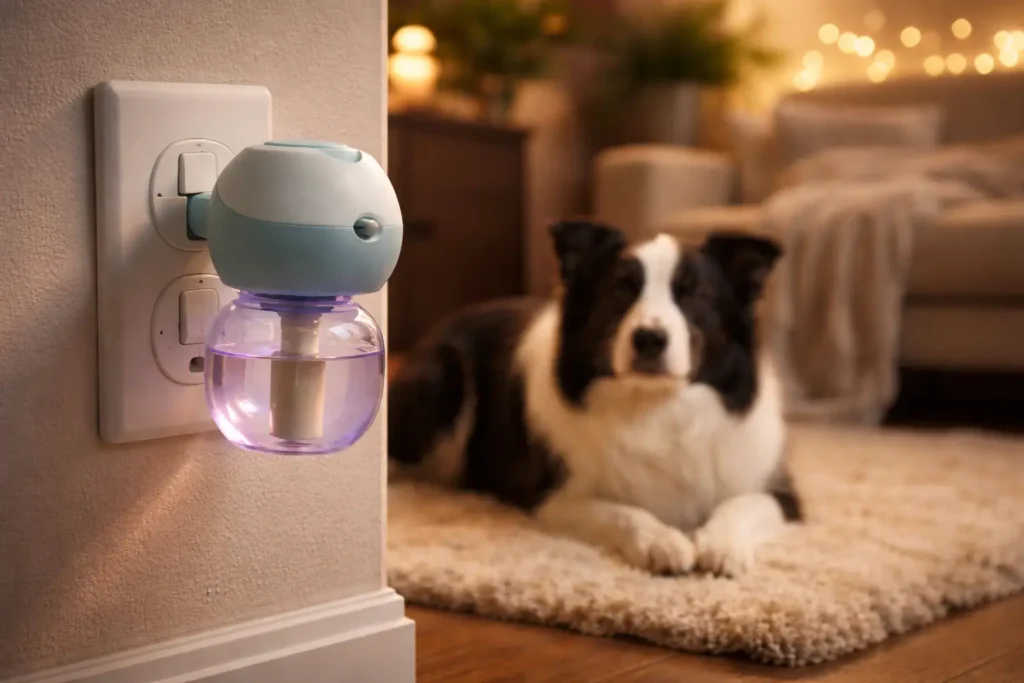
If you need results quickly, here’s the honest ranking by speed of effect:
- Anxiety wraps (ThunderShirt): Works within minutes of application. No waiting period. This is the fastest option for acute situational anxiety.
- Calming treats: Kick in within 30–60 minutes when given before a stressor. Not useful after anxiety has already escalated.
- Pheromone diffusers: Slowest to show results (7–14 days of continuous use) but provide the most consistent background calming effect for home-based anxiety.
Combining methods works better than any single product. For example, using an Adaptil diffuser daily at home while giving calming treats 45 minutes before a known stressor (like a vet visit) gives you both a baseline calming effect and situational support. This layered approach is what most veterinary behaviorists recommend.
For more on how to layer calming strategies effectively, the Pet Serenity Hub blog has practical guides on combining behavioral approaches with calming aids.
How to Choose the Right Calming Product
The right product depends on three things: the severity of your dog’s anxiety, their size and breed tendencies, and the specific situation triggering the stress.
By severity:
- Mild anxiety (occasional nervousness, mild panting): Start with calming treats or Rescue Remedy
- Moderate anxiety (frequent pacing, whining, destructive behavior): Try pheromone diffusers or Composure Pro/Solliquin
- Severe anxiety (self-harm, extreme destructive behavior, inability to settle): These products can support treatment, but you need a veterinarian or veterinary behaviorist involved
Situation:
- Separation anxiety: Adaptil diffuser at home, combined with behavioral training
- Thunderstorms or fireworks: ThunderShirt plus calming treats given 45–60 minutes before the event
- Car travel: Calming treats or Adaptil collar, given/applied before departure
- Vet visits: ThunderShirt plus calming treats; ask your vet about pre-visit medications for severe cases
- Nighttime restlessness: Melatonin-based supplements (NaturVet Quiet Moments) given 30 minutes before bed
Size and breed: Larger breeds often need higher doses of supplement-based products, so check weight-based dosing carefully. Brachycephalic breeds (bulldogs, pugs, French bulldogs) can be more sensitive to stress and may respond well to anxiety wraps since they can’t always tolerate certain supplement ingredients as well.
You can find a detailed breakdown of product comparisons by anxiety type at Pet Serenity Hub’s calming aids guide.
Natural vs. Product-Based Solutions
Natural solutions and commercial products aren’t opposites — they work best together. But knowing when to lean on each one saves you time and money.
When natural approaches work well:
- Mild anxiety triggered by specific, manageable situations
- Dogs who respond well to routine and environmental enrichment
- As a complement to commercial products (exercise before a stressor, for example, meaningfully reduces baseline anxiety)
Natural strategies worth using alongside any product: consistent daily exercise, puzzle feeders to reduce boredom-based anxiety, desensitization training for known triggers, and maintaining a predictable daily schedule.
When commercial products are necessary:
- When natural approaches alone aren’t making a dent
- For acute situational anxiety (storms, fireworks) where there’s no time for behavioral conditioning
- As a bridge while working with a trainer or behaviorist on longer-term solutions
The goal isn’t to rely on products forever. For most dogs with mild-to-moderate anxiety, a combination of behavioral work and targeted product use can reduce the need for ongoing supplementation over time.
Mistakes to Avoid When Buying Calming Products
Buying randomly based on marketing. “Natural” and “vet-recommended” on a label don’t automatically mean effective. Check the actual ingredient list. Look for products with L-theanine, melatonin, DAP pheromones, or Magnolia/Phellodendron extract — these have the most evidence behind them.
Ignoring the root cause. Products manage symptoms. If your dog’s anxiety stems from lack of socialization, a traumatic history, or a medical issue (pain, thyroid problems, cognitive decline in older dogs), no calming treat will fix that. A vet check before starting any calming regimen is always worth it.
Switching products too fast. Trying a product for three days and moving on is one of the most common mistakes. Most natural supplements need at least two weeks of consistent use. Pheromone diffusers need even longer. Give each product a fair trial before deciding it doesn’t work.
Giving calming treats reactively. If you wait until your dog is already in a full panic to give a calming treat, it’s too late. These products need to be given proactively, before the stressor hits.
When to Use Calming Products (and When to Escalate)
Signs your dog needs calming support:
- Persistent panting, pacing, or whining without a clear physical cause
- Destructive behavior when left alone
- Aggression or extreme fear responses to normal stimuli (traffic, strangers, other dogs)
- Inability to settle even in familiar, safe environments
- Physical symptoms like excessive shedding, loss of appetite, or GI issues during stressful events
When to escalate beyond OTC products:
- Anxiety is worsening despite consistent product use and behavioral work
- Your dog is injuring themselves (chewing paws raw, scratching obsessively)
- Anxiety is affecting their ability to eat, sleep, or function normally
- You’re dealing with true separation anxiety (not just mild distress but full panic responses)
In these cases, a veterinarian can discuss prescription options like fluoxetine, trazodone, or clomipramine, which are used long-term for anxiety disorders. A certified applied animal behaviorist (CAAB) can also provide structured behavior modification that goes beyond what any product can offer.
For more context on how calming pheromone products work across different pets, check out this honest review of calming pheromones that covers the science behind DAP and similar compounds.
Quick Comparison Table
| Product | Type | Price Range | Speed of Effect | Best For |
|---|---|---|---|---|
| Adaptil Calm Diffuser | Pheromone diffuser | ~$25–35 + refills | 7–14 days | Separation anxiety, home stress |
| ThunderShirt Classic | Anxiety wrap | ~$40–50 | Minutes | Noise phobias, travel |
| Zesty Paws Calming Bites | Treats/chews | ~$25–30 | 30–60 min | Mild situational anxiety |
| VetriScience Composure Pro | Supplement chews | ~$35–45 | 1–2 weeks | Moderate anxiety, step-up from basic treats |
| Adaptil Calm Collar | Pheromone collar | ~$20–30 | 7–14 days | On-the-go anxiety, travel |
| NaturVet Quiet Moments | Supplement chews | ~$15–20 | 30–60 min | Budget-friendly mild anxiety |
| Rescue Remedy Pet | Liquid drops | ~$15–20 | 20–40 min | Very mild stress, holistic preference |
| Solliquin Soft Chews | Supplement chews | ~$40–55 | 4–6 weeks | Ongoing moderate anxiety, vet-quality |
FAQ
How long does it take for dog calming products to work?
It depends on the product type. Anxiety wraps work within minutes. Calming treats take 30–60 minutes. Pheromone diffusers and most supplement-based products need 1–4 weeks of consistent use before you can fairly evaluate them.
Are calming treats safe for daily use?
Most calming treats with natural ingredients (L-theanine, melatonin, chamomile) are safe for daily use at recommended doses. Always check the label for weight-based dosing and consult your vet if your dog is on other medications or has a health condition.
Can I use multiple calming products at the same time?
Yes, combining products is often more effective than using one alone. A common pairing is a pheromone diffuser at home plus calming treats for specific events. Avoid doubling up on products with the same active ingredient (for example, two melatonin-containing products simultaneously) without vet guidance.
What’s the difference between the Adaptil diffuser and collar?
The diffuser is for home use only and provides continuous coverage in a room. The collar travels with the dog and is useful for anxiety that occurs outside the home. For dogs with both home and travel anxiety, some owners use both simultaneously.
Do anxiety wraps like ThunderShirt work for all dogs?
No. ThunderShirt reports that it works for roughly 80% of dogs based on customer feedback, but that figure comes from the company itself. Results vary. It’s most effective for noise-sensitive dogs and least effective for dogs with generalized anxiety disorders. The money-back guarantee makes it low-risk to try.
When should I talk to a vet instead of buying a product?
If your dog’s anxiety is severe, worsening, or affecting their daily quality of life (eating, sleeping, normal behavior), see a vet before spending more money on OTC products. Some anxiety cases have underlying medical causes, and prescription options are significantly more effective for true anxiety disorders.
Is hemp or CBD effective for dog anxiety?
Hemp-based calming products are popular, but the evidence base for dogs is still limited as of 2026. Some dogs respond well; others don’t. If you want to try a hemp-based product, look for one with a certificate of analysis (COA) from a third-party lab to verify potency and purity. Start with a low dose.
Can puppies use calming products?
Many calming products are safe for puppies, but always check the minimum age on the label. Adaptil is specifically designed for puppies and is one of the safest options for young dogs adjusting to a new home. Avoid high-dose melatonin products for very young puppies without vet guidance.
Conclusion
Dealing with an anxious dog is exhausting, and it’s easy to feel overwhelmed by the number of products out there. The good news is that you don’t need to try everything — you just need to start with the right one or two options for your dog’s specific situation.
If your dog struggles with separation anxiety at home, start with an Adaptil diffuser. For dogs that react strongly to loud noises, a ThunderShirt paired with calming treats (given about an hour before the trigger) can make a big difference. And when you’re unsure where to begin, a basic calming chew like Zesty Paws or NaturVet is an easy, low-cost way to test what works.
Give whatever you choose a real trial — at least two weeks for supplements, longer for pheromone products. Keep notes on what you observe. And if nothing is making a meaningful difference after a few months, that’s your cue to loop in a veterinarian.
Your dog’s anxiety is manageable. It just takes the right tools, a bit of patience, and a willingness to adjust the approach as you learn what works for your specific dog.
For more guides on calming strategies for both dogs and cats, visit Pet Serenity Hub or browse the calming aids and supplements category for additional product breakdowns and comparisons.
Related Reading:
- Best Calming Aids for Dogs 2026: Top 10 Products That Actually Work
- Calming Pheromones for Cats: Do They Really Work? Honest 2026 Review
- Tips for Cat and Dog Owners