
Cat Stress Relief Without Medication: Pheromones, Chews & More
Cat Stress Relief Without Medication: Pheromones, Chews & More
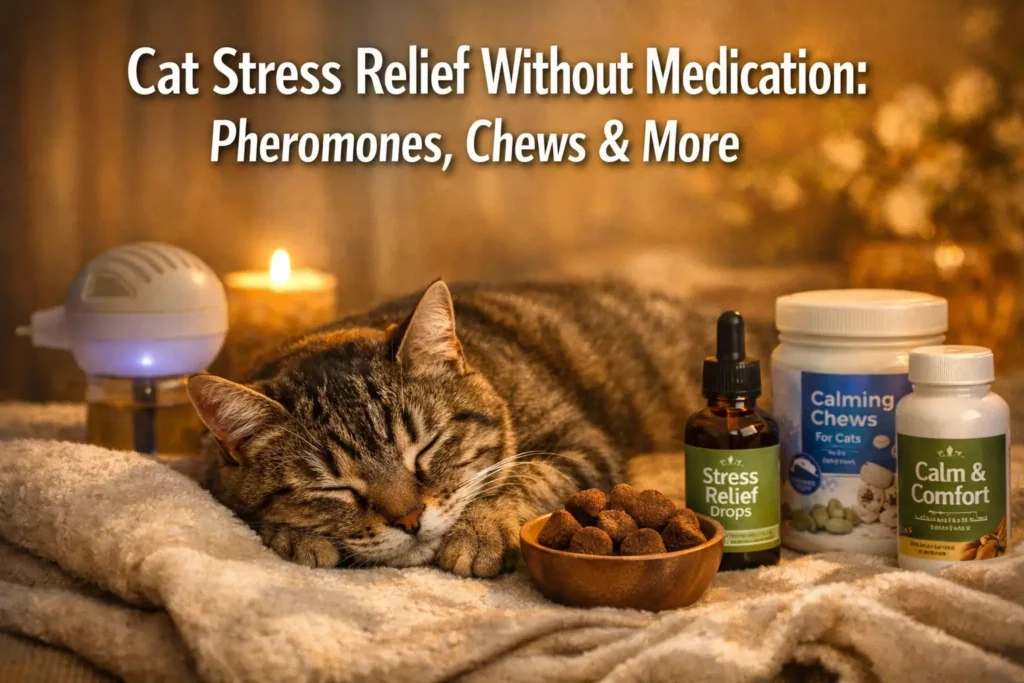
If you’ve ever watched your cat hide under the bed for three days after you rearranged the furniture, you already know — cats are sensitive souls. Stress in cats is incredibly common, and it can show up in ways that break your heart: excessive grooming, hiding, aggression, inappropriate elimination, or just that wide-eyed, tail-puffed look that tells you something is very wrong in their world.
The good news? You don’t always need a prescription to help your cat feel better. There’s a growing world of non-medication options — pheromone diffusers, calming chews, herbal sprays, anxiety collars, and more — that can make a real difference for stressed-out cats. Whether your kitty gets anxious during thunderstorms, hates car rides, or is struggling to adjust to a new pet in the house, there’s likely a product out there that can help.
This guide is here to cut through the noise. We’ve researched the most popular and effective cat stress relief products on the market, broken down how they work, and figured out which ones are worth your money. We’ll also walk you through exactly what to look for when shopping, so you can make the best choice for your specific cat and situation.
Let’s dive in.
Quick Comparison Table
Before we get into the detailed reviews, here’s a side-by-side look at the major categories of cat stress relief products you’ll encounter — so you can quickly identify which type fits your needs.
| Product Type | Typical Price | Active Ingredient | Duration/Use | Best For |
|---|---|---|---|---|
| Pheromone Diffuser | $20–$45 | Synthetic feline pheromones | 30-day continuous | Ongoing/household stress |
| Calming Chews | $15–$35 | L-theanine, melatonin, herbs | Per treat, daily use | Situational or daily anxiety |
| Calming Collar | $10–$25 | Pheromones or herbal blends | 30-day wear | Travel, vet visits, mild stress |
| Calming Spray | $10–$30 | Pheromones or botanicals | Per application | Spot treatment, carriers, bedding |
| Liquid Supplements | $20–$40 | Herbs, amino acids, vitamins | Daily dose | Chronic stress, picky eaters |
Note: Prices and availability vary by retailer. Always check current pricing before purchasing.
Now let’s get into the meat of it — what actually works, what’s overhyped, and what you should know before you buy.
Understanding Cat Stress: Why It Happens and What It Looks Like
Before we talk products, let’s talk about your cat for a second. Cats are creatures of habit. Their entire sense of security is built around predictability — familiar smells, familiar routines, familiar territory. When something disrupts that, stress kicks in fast.
Common stress triggers include:
- Moving to a new home
- New pets or people in the household
- Changes in routine or furniture arrangement
- Loud noises (fireworks, thunderstorms, construction)
- Vet visits and car travel
- Separation anxiety
- Multi-cat household tension
Signs your cat is stressed:
- Hiding more than usual
- Over-grooming or hair loss
- Urinating outside the litter box
- Aggression or sudden behavior changes
- Loss of appetite
- Excessive vocalization
- Compulsive behaviors
If you’re seeing several of these signs consistently, it’s worth talking to your vet to rule out underlying medical issues. But for situational or mild-to-moderate stress, non-medication options can be genuinely effective — and that’s exactly what we’re here to explore.
For a deeper dive into fast-acting options, check out our guide on cat stress relief fast-acting solutions over at Pet Serenity Hub.
The Main Categories of Non-Medication Cat Stress Relief
1. Pheromone Products
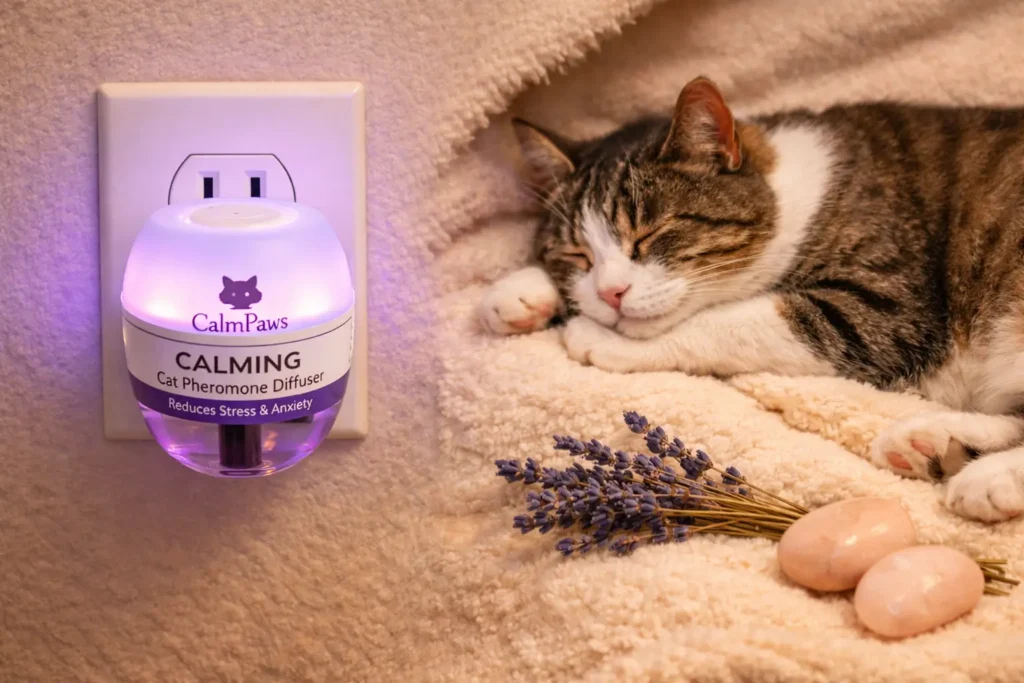
This is probably the most science-backed category of cat calming products, and it’s worth understanding why they work before you buy one.
Cats naturally produce pheromones — chemical signals that communicate safety, comfort, and familiarity. When a cat rubs their face on furniture or your legs, they’re depositing “facial pheromones” that essentially mark that area as safe. Synthetic versions of these pheromones (most notably the ones used in products like Feliway) mimic this natural signal, telling your cat’s brain: “This place is safe. You can relax.”
Types of pheromone products:
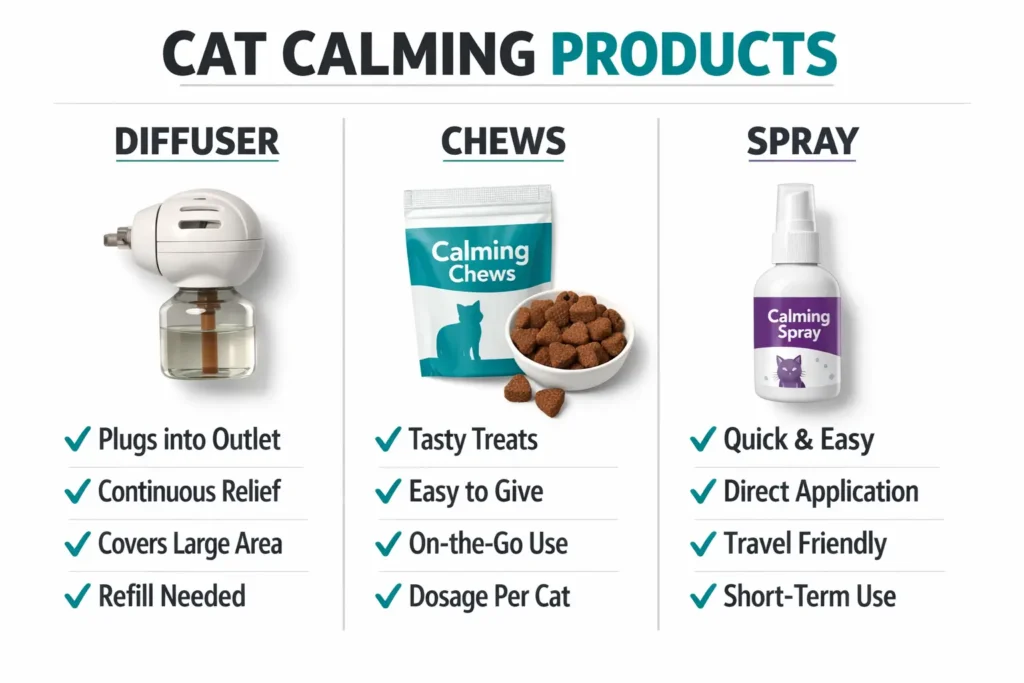
Diffusers plug into a wall outlet and continuously release synthetic pheromones into the air, covering a room (usually up to 700 square feet). They’re ideal for ongoing household stress — things like multi-cat tension, a new baby, or a recent move. You typically replace the refill every 30 days.
Sprays are more targeted. You spray them directly onto bedding, inside a carrier, or in a specific area. They’re great for situational stress — like spraying your cat’s carrier 15 minutes before a vet visit.
Collars are infused with pheromones and worn around your cat’s neck. They’re particularly useful for cats who travel frequently or who have anxiety that follows them around the house.
We’ve done a deep dive on this topic if you want more detail — our calming pheromones for cats honest review covers the science and the top products in detail.
What to look for in a pheromone product:
- Uses clinically studied pheromone formulas (look for references to feline facial pheromone F3 or multi-cat pheromones)
- Appropriate coverage area for your space
- Easy to use and refill
- Veterinarian recommended
Pros of pheromone products:
✅ Strong scientific backing
✅ No sedation or side effects
✅ Works passively — no effort required after setup
✅ Safe for kittens and senior cats
✅ Doesn’t affect humans or other pets
Cons of pheromone products:
❌ Results can take 2–4 weeks to appear
❌ Doesn’t work for every cat (roughly 30% may not respond)
❌ Ongoing cost of refills
❌ Diffusers need an available outlet
2. Calming Chews and Treats
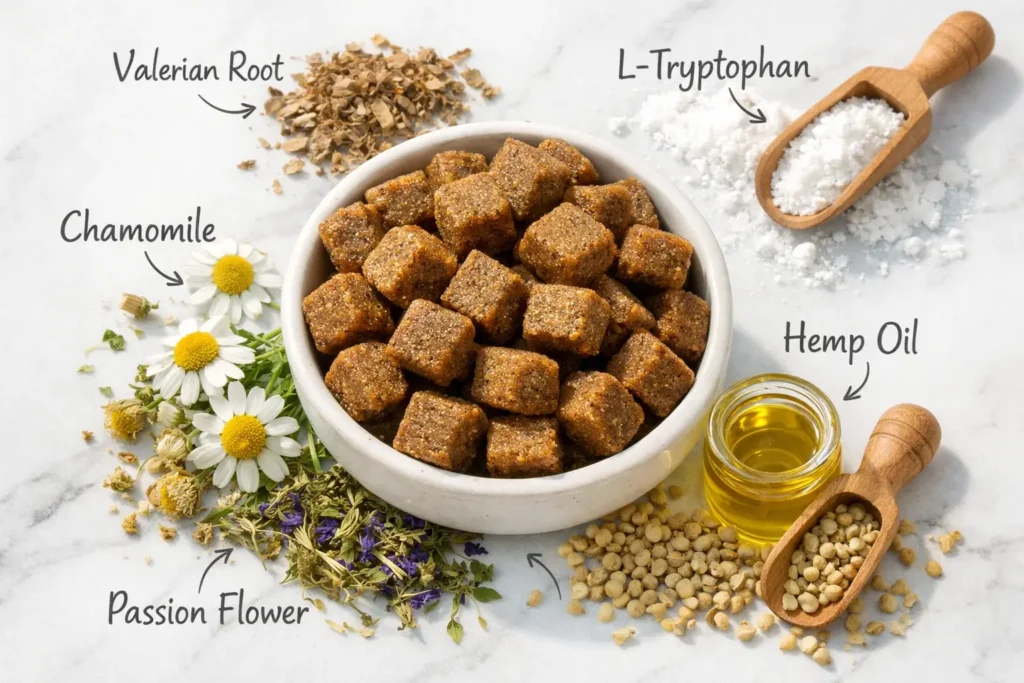
Calming chews are exactly what they sound like — treats that contain ingredients designed to reduce anxiety. They’re popular because cats often love them, they’re easy to administer, and they can work relatively quickly compared to pheromone products.
Common active ingredients:
- L-theanine – An amino acid found naturally in green tea. It promotes relaxation without drowsiness by increasing alpha brain waves. It’s one of the most well-researched calming ingredients for pets.
- Melatonin – The sleep hormone. Helps with anxiety related to sleep disruption and can take the edge off situational stress.
- Valerian root – An herbal sedative that many cats find calming (some cats actually respond to it like catnip!).
- Chamomile – A mild herbal relaxant with anti-anxiety properties.
- Tryptophan – An amino acid precursor to serotonin. Helps regulate mood.
- Colostrum – Milk proteins that have shown some promise in reducing anxiety in pets.
- Thiamine (Vitamin B1) – Supports nervous system health and can reduce stress responses.
What to look for in calming chews:
- Clear ingredient list with research-backed actives
- No artificial colors, flavors, or fillers
- Appropriate dosage for your cat’s weight
- Palatability (your cat actually has to eat it!)
- Made by a reputable company with quality manufacturing standards (look for NASC seal or cGMP certified facilities)
Pros of calming chews:
✅ Can work within 30–60 minutes for situational anxiety
✅ Easy to give (most cats love the taste)
✅ Flexible dosing — use as needed or daily
✅ Wide variety of formulas available
✅ Generally affordable
Cons of calming chews:
❌ Some cats refuse to eat them
❌ Quality varies wildly between brands
❌ Not a long-term solution for severe anxiety
❌ Ingredients can interact with medications
3. Calming Sprays
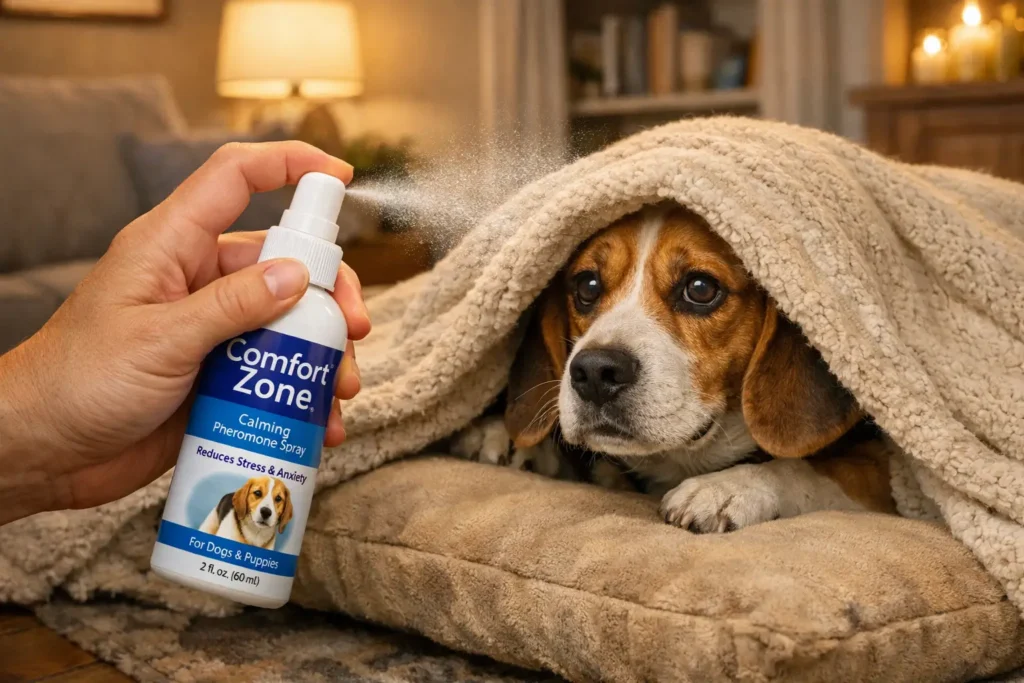
Sprays are versatile and fast-acting. You apply them to specific surfaces — a carrier, a blanket, a bed — and the calming agents (usually pheromones or botanical extracts) do their work. They’re particularly popular for:
- Preparing a carrier before a vet visit
- Calming a new cat’s introduction space
- Reducing tension in a specific area of the home
- Travel situations
What to look for:
- Alcohol-free formulas (alcohol can be irritating to cats)
- Pheromone-based OR botanical-based (both can work, just differently)
- Fast-drying formula
- Appropriate for use around cats (always check!)
Pros of sprays:
✅ Targeted application
✅ Fast to use
✅ Portable and travel-friendly
✅ No ongoing subscription needed
Cons of sprays:
❌ Effects don’t last as long as diffusers
❌ Needs to be reapplied regularly
❌ Some cats may be put off by the spray smell initially
4. Calming Collars
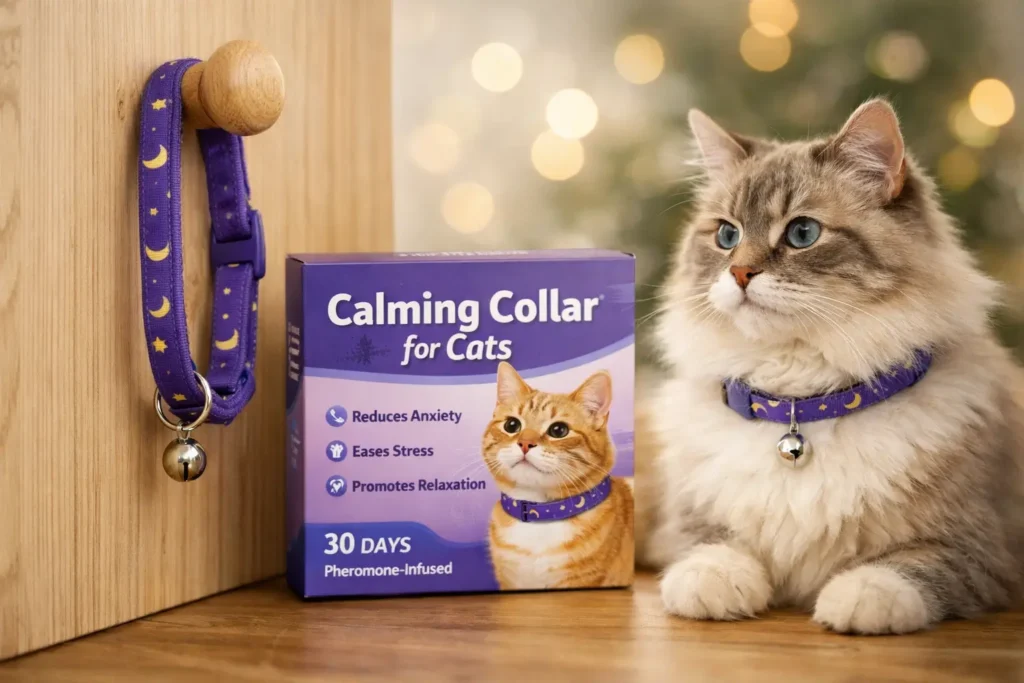
Calming collars are worn around your cat’s neck and slowly release calming agents — usually pheromones, essential oils, or herbal blends — over the course of 30 days. The idea is that since the collar is always with your cat, the calming effect travels with them.
They’re a good option for:
- Cats who are anxious in multiple environments
- Travel situations
- Cats who don’t respond well to room diffusers
- Situations where you can’t plug in a diffuser (travel, hotels)
What to look for:
- Adjustable fit with a safety breakaway mechanism
- Pheromone-based formulas tend to be more reliable than essential oil blends
- Waterproof or water-resistant
- 30-day efficacy claim backed by research
Pros of calming collars:
✅ Portable — goes wherever your cat goes
✅ Continuous release over 30 days
✅ No setup required
✅ Good for travel
Cons of calming collars:
❌ Some cats hate wearing collars
❌ Essential oil-based collars can be irritating if your cat is sensitive
❌ Not suitable for cats who don’t wear collars
❌ Less effective for whole-home stress
5. Liquid Supplements
Liquid supplements are added directly to food or water and are a great option for cats who won’t take chews or treats. They often contain similar active ingredients to chews — L-theanine, tryptophan, herbs — but in liquid form.
They’re particularly useful for:
- Picky eaters who refuse treats
- Cats on specific diets
- Long-term, daily anxiety management
- Multi-cat households where you want to dose everyone at once
What to look for:
- Flavorless or very mild flavor (cats are notoriously picky)
- Precise dosing dropper or measuring cap
- Clean ingredient list
- Manufactured to supplement quality standards
Pros of liquid supplements:
✅ Easy to hide in food
✅ Precise dosing
✅ Good for picky cats who won’t take treats
✅ Often more cost-effective per dose
Cons of liquid supplements:
❌ Some cats can smell/taste additives and refuse food
❌ Harder to dose accurately in multi-cat households
❌ Results take time — not for immediate situational anxiety
Buying Guide: What to Consider Before You Purchase
With so many options out there, it can feel overwhelming. Here’s a straightforward framework for choosing the right product for your cat.
1. Identify the Type of Stress
Situational stress (vet visits, car rides, fireworks, guests) calls for fast-acting solutions — calming chews, sprays, or a calming collar worn in advance.
Ongoing/chronic stress (new pet, new home, multi-cat tension) is better addressed with continuous solutions — pheromone diffusers or daily liquid supplements.
Travel-specific stress — a combination of a calming collar plus a sprayed carrier tends to work well.
2. Know Your Cat’s Personality
Is your cat food-motivated? Chews and liquid supplements are your friend. Does your cat hate wearing anything around their neck? Skip the collar. Does your cat spend most of their time in one room? A diffuser in that room makes sense.
3. Check the Ingredients
Look for products with research-backed ingredients. L-theanine, synthetic feline pheromones (F3), and melatonin have the most scientific support. Be wary of products with long lists of vague “proprietary blends” with no clear active ingredients.
4. Look for Quality Markers
- NASC (National Animal Supplement Council) Quality Seal — indicates the company follows strict quality standards
- cGMP certified manufacturing — means the product is made in a facility that follows pharmaceutical-grade manufacturing practices
- Veterinarian formulated or recommended — adds credibility (though always verify this claim)
5. Consider Your Budget
Pheromone diffusers have an ongoing refill cost (~$15–$20/month). Calming chews can range from budget-friendly to premium. Think about whether you need a one-time solution or an ongoing one, and budget accordingly.
6. Be Patient
Most non-medication calming products — especially pheromones — take time. Give any product at least 4 weeks of consistent use before deciding if it works. Many cat owners give up too early.
7. Combine Approaches
The most effective stress management strategies usually combine multiple approaches. A pheromone diffuser in the main living area + calming chews before a vet visit + environmental enrichment (more hiding spots, vertical space, puzzle feeders) is going to work better than any single product alone.
For more comprehensive guidance on calming aids, the team at Pet Serenity Hub has put together some excellent resources across multiple product categories.
Environmental Enrichment: The Free Stress Relief You’re Probably Overlooking
Before we get to the FAQ, let’s talk about something that costs nothing but makes a huge difference: your cat’s environment.
No calming product will work as well as it should if your cat’s basic environmental needs aren’t met. Here’s what stressed cats often need more of:
Vertical space — Cat trees, shelves, and perches give cats a sense of control and safety. High spots = safe spots in cat psychology.
Hiding spots — Covered beds, cardboard boxes, and cat caves give anxious cats a place to decompress.
Predictable routine — Feed at the same times, play at the same times. Predictability = safety for cats.
Interactive play — 15–20 minutes of wand toy play daily can dramatically reduce anxiety by burning off stress hormones.
Litter box hygiene — A dirty litter box is a major stressor. Scoop daily, clean weekly.
Separate resources in multi-cat homes — One litter box per cat plus one extra, multiple feeding stations, multiple water sources. Competition for resources is a huge source of cat stress.
Think of calming products as a support system that works alongside a good environment — not a substitute for one.
FAQ: Your Cat Stress Relief Questions Answered
Q: How long do pheromone products take to work?
Most pheromone products — especially diffusers — take 2 to 4 weeks of consistent use before you’ll see noticeable results. This is one of the biggest reasons people give up on them too early. Commit to a full month before deciding if it’s working. Sprays work faster for situational use (spray 15 minutes before a stressful event), but for ongoing anxiety, patience is key.
Q: Are calming chews safe for all cats?
Most calming chews are safe for healthy adult cats, but there are some important caveats. Always check with your vet if your cat:
- Is on any medications (some ingredients can interact)
- Has kidney disease, liver disease, or other chronic conditions
- Is pregnant or nursing
- Is very young (kitten) or very old
Also, always follow the dosing instructions on the label. More is not better with calming supplements.
Q: Can I use multiple calming products at the same time?
Yes, in most cases you can — and it’s often recommended. A pheromone diffuser running continuously combined with calming chews given before a stressful event is a very common and effective combination. Just be mindful of overlapping ingredients if you’re using multiple supplement-based products (chews + liquid supplement, for example), and check with your vet if you’re unsure.
Q: My cat seems more anxious after I started using a calming spray. What’s going on?
This can happen! Some cats are initially put off by the smell of a new spray, especially if it has a strong herbal or alcohol component. Try spraying the item (carrier, blanket) and letting it dry and air out for 15–30 minutes before introducing your cat to it. If the reaction continues, try a different product — not every formula works for every cat.
Q: When should I see a vet instead of trying over-the-counter options?
If your cat’s stress is severe, sudden, or accompanied by physical symptoms (not eating, vomiting, significant weight loss, wounds from over-grooming), please see your vet. Sudden behavior changes can sometimes indicate underlying medical issues rather than pure anxiety. OTC calming products are best for mild to moderate, situational, or chronic-but-manageable stress. For severe anxiety, your vet may recommend prescription options — and that’s okay too. You can always use non-medication products alongside veterinary treatment. Check out our calming aids and supplements category for more guidance on when to escalate to professional help.
Final Verdict: What Should You Actually Buy?
Here’s the bottom line, based on everything we’ve covered:
For ongoing household stress (new pet, new home, multi-cat tension): Start with a pheromone diffuser. It’s the most passive, consistent solution and has the strongest scientific backing. Give it 4 weeks.
For situational anxiety (vet visits, travel, fireworks): Calming chews given 30–60 minutes before the event, combined with a pheromone spray on the carrier or bedding, is your best bet.
For cats who won’t take treats: Try a liquid supplement added to food, or a calming collar for continuous low-level support.
For travel-heavy cats: A calming collar is your most portable, hassle-free option.
For severe or complex anxiety: Please work with your vet. Non-medication options can absolutely be part of the plan, but a professional assessment is important.
The most important thing to remember? Consistency matters more than the specific product. Whatever you choose, give it time, pair it with a stress-supportive environment, and don’t give up after a week. Your cat’s nervous system didn’t get wound up overnight, and it won’t unwind overnight either.
For more resources on keeping your pets calm and happy — cats and dogs alike — explore the full library at Pet Serenity Hub. And if you’re also a dog owner dealing with similar challenges, our best calming aids for dogs guide is worth a read too.
Your cat deserves to feel safe and relaxed in their home. With the right tools and a little patience, you can absolutely get there.