
Dog Appeasing Pheromone vs Calming Aid for Dogs: Which One is Better?
Dog Appeasing Pheromone vs Calming Aid for Dogs: What’s the Best Option for Your Dog?
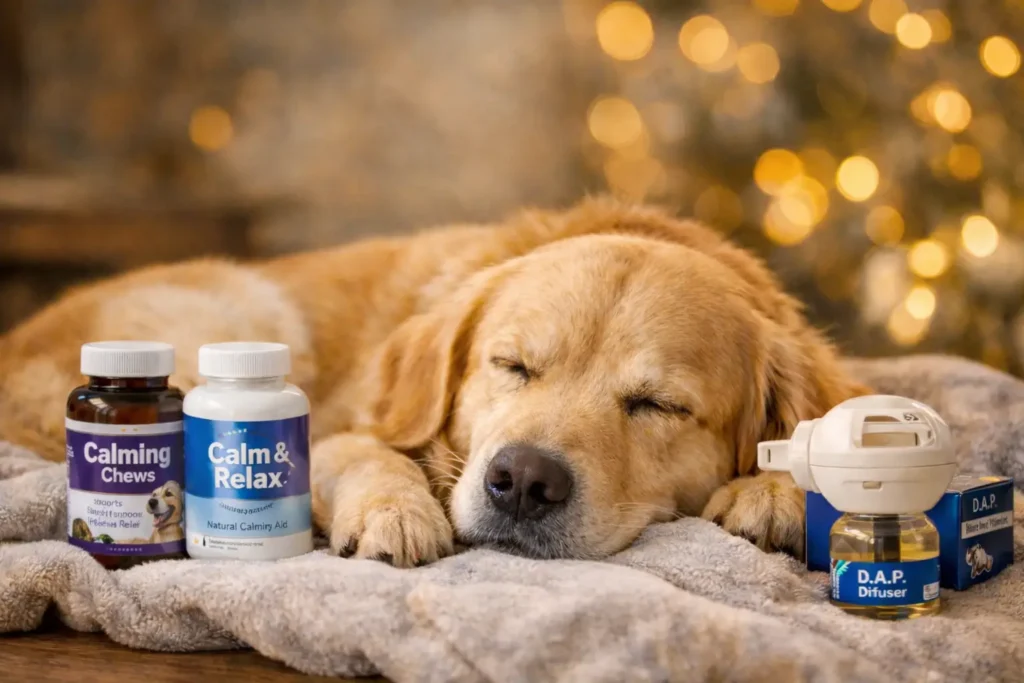
If you’ve ever watched your dog tremble during a thunderstorm, pace anxiously before a vet visit, or bark uncontrollably when guests arrive, you already know how heartbreaking canine anxiety can be. You want to help — but the pet market is absolutely flooded with options, and figuring out what actually works can feel overwhelming.
Two of the most popular categories of anxiety solutions for dogs are calming aids (think supplements, chews, and drops) and Dog Appeasing Pheromone (DAP) products (diffusers, sprays, and collars). Both promise to bring peace and calm to your stressed-out pup, but they work in completely different ways, suit different situations, and come with their own sets of pros and cons.
So which one should you actually spend your money on?
In this guide, we’re going to break it all down for you — clearly, honestly, and without the marketing fluff. Whether your dog is a nervous rescue, a storm-phobic senior, or a puppy struggling with separation anxiety, this comparison will help you make the right call. We’ll look at how each approach works, what the science says, real-world effectiveness, cost, convenience, and ultimately, which solution (or combination!) is best for your dog’s specific situation.
Let’s dig in.
Quick Comparison Table: Calming Aids vs Dog Appeasing Pheromone
Before we get into the deep dive, here’s a fast side-by-side look at how these two categories stack up across the most important factors:
| Feature | Calming Aids (Supplements) | Dog Appeasing Pheromone (DAP) |
|---|---|---|
| How It Works | Nutrients/herbs act on brain chemistry | Synthetic pheromone mimics nursing mother signal |
| Forms Available | Chews, capsules, liquids, treats | Diffuser, spray, collar, wipes |
| Speed of Action | 30–90 minutes (some faster) | 15–30 minutes (spray); 24–48 hrs (diffuser) |
| Duration | Hours per dose | Continuous (diffuser/collar); short-term (spray) |
| Best For | Acute anxiety events, travel, vet visits | Separation anxiety, new environments, puppies |
| Suitable For | All ages (check ingredients) | All ages, including puppies 3+ weeks |
| Side Effects | Possible drowsiness, GI upset | Minimal; non-sedating |
| Prescription Needed | No (OTC supplements) | No (OTC) |
| Average Cost | $15–$60/month | $20–$55/month |
| Scientific Support | Moderate (varies by ingredient) | Good (multiple peer-reviewed studies) |
| Ease of Use | Easy (mix into food or give as treat) | Very easy (plug in and forget) |
| Multi-Pet Households | Targets individual dog | Diffuser affects all pets in area |
Understanding the Basics: What Are We Actually Comparing?
Before we review each approach in detail, let’s make sure we’re on the same page about what these products actually are.
What Are Calming Aids for Dogs?
Calming aids for dogs are non-prescription supplements formulated to reduce anxiety, stress, and nervous behavior through nutritional or herbal ingredients. They come in many forms — soft chews (the most popular), capsules, powders, liquids, and even calming treats baked right into dog biscuits.
Common active ingredients include:
- L-Theanine — An amino acid found in green tea that promotes relaxation without sedation
- Melatonin — A hormone that regulates sleep-wake cycles and can reduce anxiety
- Valerian Root — An herbal sedative with calming properties
- Chamomile — A mild herbal relaxant
- Ashwagandha — An adaptogen that helps the body manage stress
- Thiamine (Vitamin B1) — Supports healthy nervous system function
- Hemp/CBD — Increasingly popular; interacts with the endocannabinoid system
- Tryptophan — An amino acid precursor to serotonin
The idea is that these ingredients either support neurotransmitter production (like serotonin and GABA), reduce cortisol levels, or directly calm the nervous system. Most calming aids are designed to be given before a stressful event or daily for dogs with chronic anxiety.
You can explore a curated list of the most effective options at Pet Serenity Hub’s Best Calming Aids for Dogs guide — it’s one of the most thorough roundups available.
What Is Dog Appeasing Pheromone (DAP)?
Dog Appeasing Pheromone, commonly marketed under the brand name Adaptil (though other brands exist), is a synthetic version of a natural pheromone that nursing mother dogs release from the sebaceous glands between their mammary glands. This pheromone is detected by puppies and adult dogs through the vomeronasal organ (also called the Jacobson’s organ) and communicates a powerful message: you are safe, you are loved, everything is okay.
DAP products don’t smell like anything to humans — you literally cannot detect them. But dogs can, and the neurological response they trigger is deeply rooted in canine biology.
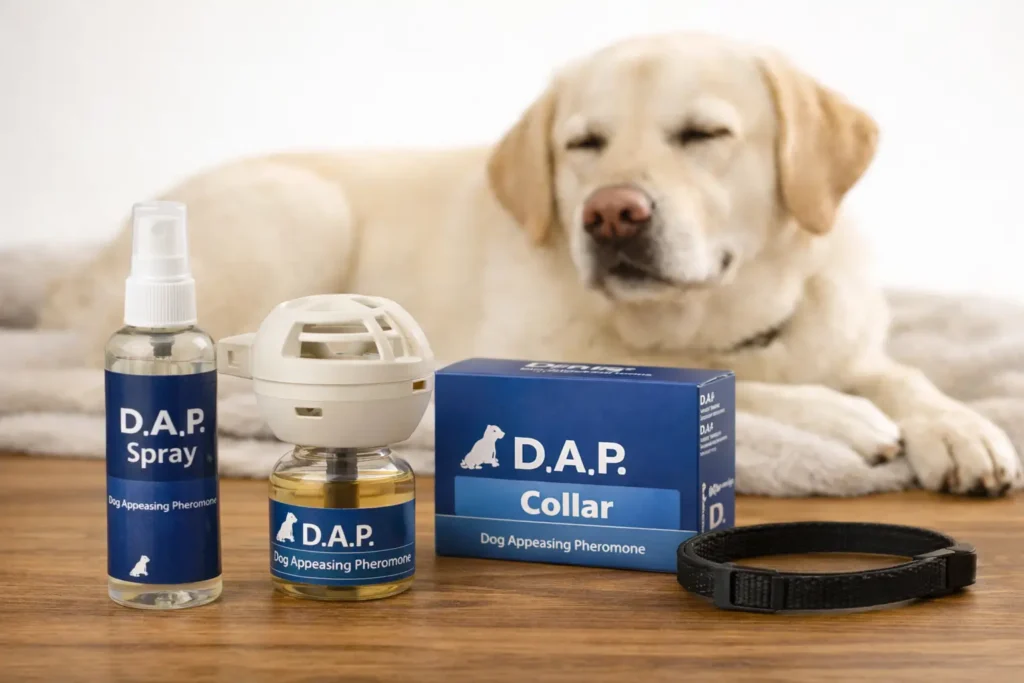
DAP comes in several delivery formats:
- Plug-in diffusers — Like a Febreze plugin but for dog anxiety; covers a room continuously for about 30 days
- Sprays — Applied to bedding, crates, bandanas, or car interiors
- Calming collars — Worn around the dog’s neck; body heat activates the pheromone release
- Wipes — For quick, targeted application
Deep Dive Review: Calming Aids for Dogs
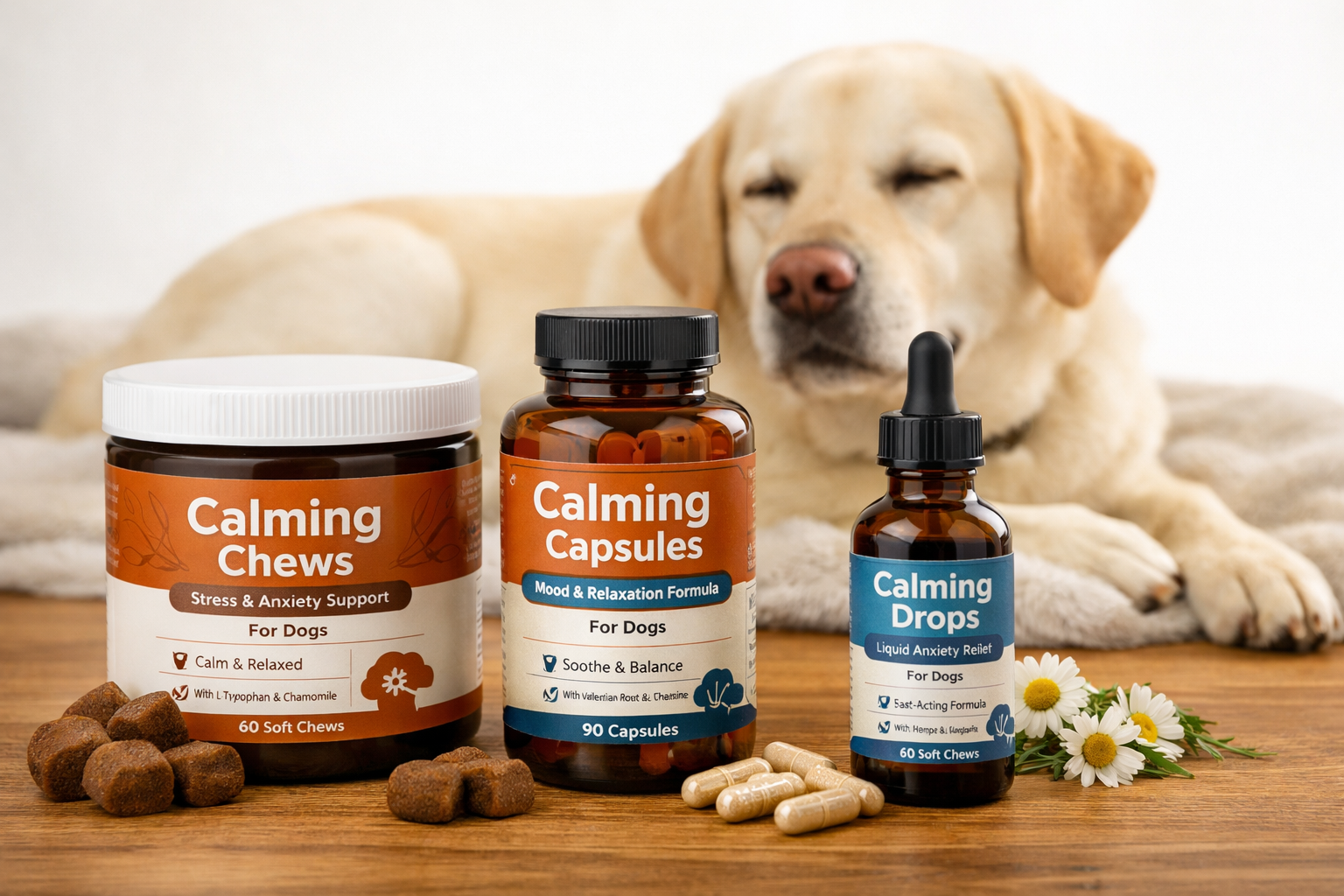
How Calming Supplements Work in Practice
When you give your dog a calming chew or supplement, you’re essentially providing the building blocks or direct compounds that help regulate their nervous system. Think of it like giving a stressed-out person a cup of chamomile tea or a magnesium supplement — you’re working with the body’s chemistry rather than overriding it with sedation.
The key thing to understand is that not all calming aids are created equal. The effectiveness of a calming supplement depends enormously on:
- The quality and bioavailability of the ingredients
- The dosage (many budget products underdose key ingredients)
- Your dog’s individual biochemistry
- The type and severity of anxiety
For mild to moderate anxiety, well-formulated supplements with clinically studied ingredients like L-Theanine, Suntheanine (a patented form of L-Theanine), or alpha-casozepine (a milk protein derivative) have solid scientific backing. For severe anxiety, supplements alone may not be sufficient.
✅ Pros of Calming Aids
- Targeted dosing — You control exactly how much your dog gets based on their weight and needs
- Fast-acting options available — Many chews work within 30–60 minutes, making them great for predictable stressors like fireworks or car rides
- Wide variety of formulations — Easy to find something your picky eater will actually consume
- Addresses multiple anxiety pathways — Multi-ingredient formulas can target serotonin, GABA, and cortisol simultaneously
- Portable and travel-friendly — Toss a bag of chews in your purse; no diffuser required
- Can be used alongside other treatments — Generally safe to combine with behavioral training or vet-prescribed medications (always check with your vet)
- No scent or environmental impact — Only affects the dog that consumes it, not other pets or people
- Available in natural/organic formulations — Great for owners who prefer minimal synthetic ingredients
❌ Cons of Calming Aids
- Inconsistent quality across brands — The supplement industry has less regulation than pharmaceuticals, so ingredient quality varies wildly
- Requires planning ahead — Most need 30–90 minutes to kick in; not great for sudden, unexpected anxiety
- Daily administration required — For chronic anxiety, you’re giving something every single day, which can be a hassle
- Palatability issues — Some dogs simply refuse to eat supplements, no matter how cleverly disguised
- Possible side effects — Drowsiness, loose stools, or vomiting can occur, especially with higher doses or sensitive dogs
- Cost can add up — Quality supplements for a large dog can run $40–$60/month
- Not a cure — Supplements manage symptoms but don’t address the root cause of anxiety
Key Features to Look For in Calming Aids
When shopping for a calming supplement, prioritize products that:
- List specific ingredient amounts (not “proprietary blends” that hide dosages)
- Use clinically studied ingredients like Suntheanine, Zylkene (alpha-casozepine), or Anxitane
- Are manufactured in GMP-certified facilities
- Have NASC (National Animal Supplement Council) quality seal
- Have transparent third-party testing
- Are appropriately dosed for your dog’s weight
Who Are Calming Aids Best For?
Calming supplements are an excellent choice if your dog experiences:
- Situational anxiety — Fireworks, thunderstorms, car rides, vet visits, grooming appointments
- Mild to moderate generalized anxiety — Everyday nervousness that doesn’t rise to the level of requiring prescription medication
- Travel stress — Especially helpful for road trips or flights
- Post-surgery or medical recovery — When you need a gentle calming effect without heavy sedation
- Dogs whose owners prefer a nutritional/herbal approach — Before escalating to pharmaceuticals
They’re also a good starting point for owners who are just beginning to address their dog’s anxiety and want to try something accessible before consulting a veterinary behaviorist.
For a broader look at calming options across species, the team at Pet Serenity Hub covers both dog and cat anxiety solutions with science-backed recommendations.
Deep Dive Review: Dog Appeasing Pheromone (DAP)
How DAP Works in Practice
Here’s what makes DAP genuinely fascinating from a scientific standpoint: it’s not a drug, it’s not a sedative, and it doesn’t alter your dog’s brain chemistry in any measurable pharmacological way. Instead, it communicates through a biological channel that’s been hardwired into dogs since before domestication.
When a nursing mother dog produces this pheromone, her puppies experience a profound sense of security. The message is primal and deeply embedded: this is home, this is safe, you are protected. Researchers discovered that this same pheromone continues to have a calming effect on adult dogs — it essentially triggers the same neurological “safety signal” that puppies receive from their mothers.
The synthetic version (DAP) replicates this pheromone molecule, and when dogs detect it through their vomeronasal organ, the calming response is triggered without any conscious processing. Your dog doesn’t need to “learn” to respond to it — it’s instinctual.
Multiple peer-reviewed studies have demonstrated DAP’s effectiveness for:
- Separation anxiety
- Fear of loud noises (thunderstorms, fireworks)
- Adjustment to new homes or environments
- Kennel stress
- Social anxiety and fear of strangers
- Post-adoption adjustment in rescue dogs
One particularly compelling aspect of DAP research is that it has been studied in clinical settings — veterinary hospitals, shelters, and controlled trials — with measurable outcomes. This gives it a stronger evidence base than many supplement ingredients.
✅ Pros of Dog Appeasing Pheromone
- Non-pharmacological — No drugs, no sedation, no altered consciousness; completely natural signaling mechanism
- Extremely easy to use — Plug in a diffuser and essentially forget about it; no daily dosing required
- Works continuously — Diffusers provide 24/7 coverage for up to 30 days, ideal for chronic or ongoing anxiety
- No taste or palatability issues — Dogs don’t need to eat anything; works through scent detection
- Safe for puppies — Can be used with very young dogs (3+ weeks), making it ideal for new puppy adjustment
- Good scientific support — Multiple peer-reviewed studies back its effectiveness
- Non-sedating — Your dog remains alert, active, and fully themselves — just calmer
- Collar format is portable — Great for dogs who experience anxiety in multiple environments
- Virtually no side effects — Extremely well-tolerated; no known drug interactions
- Invisible to humans — No smell, no mess, no disruption to your home environment
❌ Cons of Dog Appeasing Pheromone
- Variable effectiveness — Studies show it works well for many dogs, but not all dogs respond equally; some show little to no improvement
- Diffuser covers limited area — One diffuser typically covers about 700 square feet; large homes may need multiple units
- Affects all animals in the space — If you have cats, the diffuser will expose them too (though DAP is dog-specific and generally considered safe for cats)
- Spray effect is short-lived — The spray format only lasts 4–5 hours, requiring reapplication
- Collar can be uncomfortable — Some dogs dislike wearing a collar 24/7, and the collar needs to be replaced monthly
- Not ideal for acute, sudden anxiety — The diffuser works best as a preventive/ongoing solution; it’s not something you can deploy in the moment
- Cost of ongoing use — Refills run $20–$35/month; collars are $25–$40 each
- Doesn’t address behavioral root causes — Like supplements, DAP manages symptoms rather than resolving underlying behavioral issues
Key Features to Look For in DAP Products
When choosing a DAP product, consider:
- Brand reputation — Adaptil (by Ceva Animal Health) is the most studied and widely recommended brand; look for their clinical data
- Format matching your need — Diffuser for home/chronic anxiety; spray for travel or acute events; collar for dogs who are anxious in multiple locations
- Coverage area — Make sure the diffuser covers the room(s) where your dog spends the most time
- Refill availability and cost — Factor in the ongoing expense of refills or collar replacements
- Combination packs — Some brands offer starter kits with diffuser + refill + spray, which can offer better value
Who Is DAP Best For?
DAP is particularly well-suited for:
- Puppies and newly adopted dogs — The adjustment period is exactly when that “mother’s comfort” signal is most powerful
- Dogs with separation anxiety — The continuous coverage of a diffuser is ideal for dogs who are anxious while home alone
- Multi-dog households — One diffuser can help multiple dogs simultaneously
- Dogs with noise phobias — When used proactively (plugged in before storm season, for example), it can significantly reduce reactivity
- Owners who want a hands-off solution — No daily administration, no measuring doses, no convincing a picky dog to eat something
- Dogs who can’t or won’t take oral supplements — Medical conditions, extreme pickiness, or post-surgical restrictions
If you’re also exploring pheromone solutions for cats in your household, Pet Serenity Hub’s guide on calming pheromones for cats is a great companion resource.
Calming Aids vs DAP: Head-to-Head Breakdown
Now that we’ve reviewed each approach individually, let’s compare them directly across the factors that matter most to dog owners.
Effectiveness
Winner: Tie (depends on anxiety type)
For situational anxiety (specific, predictable events), calming supplements — especially those with fast-acting ingredients — have an edge because you can time the dose precisely. For chronic or environmental anxiety (separation anxiety, adjustment issues, ongoing stress), DAP’s continuous coverage gives it an advantage. The best results in clinical practice often come from using both together.
Speed of Action
Winner: Calming Aids (for acute situations)
Most calming chews work within 30–60 minutes. DAP sprays can work in 15–30 minutes, but the diffuser format takes 24–48 hours to build up in a space. If your dog is anxious right now, a calming supplement is the faster tool.
Ease of Use
Winner: DAP
Plug in a diffuser once a month. That’s genuinely hard to beat. Supplements require daily or situational administration, which adds up in terms of time and mental load — especially for busy pet owners.
Safety Profile
Winner: DAP
DAP has an exceptionally clean safety profile with virtually no reported adverse effects. Supplements, while generally safe, carry more risk of GI upset, drowsiness, or interactions with medications. That said, well-formulated supplements from reputable brands are also very safe.
Cost Over Time
Winner: Depends on format
A month’s supply of quality calming chews for a large dog might run $40–$60. A DAP diffuser refill runs $20–$35/month. For budget-conscious owners, DAP can be more economical — but if you only need occasional situational support, a bag of calming chews used sparingly could last months.
Scientific Evidence
Winner: DAP (slightly)
DAP has more peer-reviewed clinical studies specifically evaluating its effectiveness in dogs. Supplement research varies significantly by ingredient — L-Theanine and alpha-casozepine have decent evidence, but many herbal ingredients in calming blends have limited rigorous study.
Flexibility
Winner: Calming Aids
Supplements come in more formats, can be dosed precisely by weight, and can be adjusted based on the severity of the situation. You can give a half dose for mild anxiety or a full dose for a major stressor. DAP is more of an all-or-nothing, ambient solution.
Buying Guide: What to Consider Before You Purchase
Choosing between calming aids and DAP (or deciding to use both) comes down to a handful of key factors. Here’s what to think through:
1. Identify Your Dog’s Anxiety Type
Is the anxiety situational (triggered by specific events) or chronic (ongoing, daily stress)? Situational anxiety often responds better to fast-acting supplements. Chronic anxiety benefits more from continuous solutions like DAP diffusers.
2. Consider Your Dog’s Age and Health
Puppies and senior dogs may have different tolerances for supplement ingredients. DAP is safe across all life stages. If your dog is on medication, always check with your vet before adding supplements.
3. Think About Your Lifestyle
Are you home most of the day, or is your dog alone for hours? A diffuser running while you’re at work is a set-it-and-forget-it solution. If you’re home and can administer supplements at the right time, that might work better for your routine.
4. Assess Severity
For mild anxiety, either approach may be sufficient. For moderate anxiety, combining both is often more effective than either alone. For severe anxiety (destructive behavior, self-harm, complete inability to function), please consult a veterinary behaviorist — OTC solutions may not be enough.
5. Budget
Calculate the monthly cost of each option for your dog’s size. Don’t just look at the upfront price — factor in refills, replacement collars, or ongoing supplement subscriptions.
6. Read the Labels Carefully
For supplements: look for specific ingredient amounts, not proprietary blends. For DAP: look for products that reference clinical studies and have veterinary endorsement.
7. Give It Time
Neither calming aids nor DAP are instant miracle solutions. Most experts recommend a 4–8 week trial before evaluating effectiveness. Anxiety management is often a process, not a single fix.
8. Combine With Behavioral Support
Both calming aids and DAP work best as part of a comprehensive approach that includes positive reinforcement training, desensitization, environmental management, and — when needed — professional behavioral support. They’re tools, not cures.
For more tips on managing pet stress holistically, check out the Pet Serenity Hub blog for regularly updated, expert-reviewed content.
FAQ: Your Most Common Questions Answered
Q1: Can I use calming supplements and DAP at the same time?
Absolutely, and it’s often recommended. These two approaches work through completely different mechanisms — one through nutrition/biochemistry, the other through pheromone signaling — so they don’t interfere with each other. In fact, combining a DAP diffuser for ongoing ambient calm with situational calming chews before specific stressors is one of the most effective strategies for dogs with moderate anxiety. Many veterinary behaviorists recommend this multi-modal approach.
Q2: How long does it take for DAP to start working?
It depends on the format. DAP spray can have an effect within 15–30 minutes of application. DAP collars typically need 24 hours to reach effective pheromone levels. DAP diffusers need 24–48 hours to adequately saturate a room. For best results with a diffuser, plug it in several days before an anticipated stressful event (like the Fourth of July or a house move) rather than the day of.
Q3: Are calming supplements safe for puppies?
Many calming supplements are safe for puppies, but you need to check the minimum age recommendation on the specific product. Some ingredients (like certain herbs or high-dose melatonin) may not be appropriate for very young dogs. DAP is generally considered safer for puppies of all ages, as it’s non-pharmacological. Always consult your veterinarian before giving any supplement to a puppy under 12 weeks.
Q4: My dog has severe separation anxiety — will either of these help?
Both can help as part of a treatment plan, but severe separation anxiety typically requires a more comprehensive approach. DAP diffusers have the strongest evidence base for separation anxiety specifically, but they work best when combined with a structured desensitization and counter-conditioning program. For severe cases, please work with a certified veterinary behaviorist or a certified professional dog trainer (CPDT-KA) — and your vet may also recommend prescription anti-anxiety medication alongside behavioral therapy.
Q5: Do calming supplements make dogs drowsy?
Some do, some don’t — it depends on the ingredients. Products containing valerian root, melatonin, or hops tend to have more sedating effects. Products centered on L-Theanine, alpha-casozepine, or ashwagandha are designed to promote calm without sedation. If you need your dog to be alert (for a dog sport, training session, or social event), choose a non-sedating formula. DAP is definitively non-sedating — your dog will be fully alert and functional.
Final Verdict: Which One Is Better?
Here’s the honest answer: neither is universally “better” — they’re different tools for different jobs. The right choice depends entirely on your dog’s specific anxiety profile, your lifestyle, and your goals.
Choose Calming Aids if:
- Your dog’s anxiety is situational and predictable (storms, fireworks, vet visits, travel)
- You want precise, weight-appropriate dosing
- You prefer a nutritional/herbal approach
- You need something fast-acting for specific events
- Your dog is anxious in multiple environments where a diffuser isn’t practical
Choose DAP if:
- Your dog struggles with separation anxiety or chronic, ongoing stress
- You’ve just adopted a new dog or puppy and want to ease the transition
- You want a completely hands-off, low-maintenance solution
- Your dog refuses to eat supplements
- You want something with strong clinical research backing
- You have multiple dogs who could all benefit simultaneously
Use Both if:
- Your dog has moderate to significant anxiety across multiple situations
- You want maximum coverage — ambient calm from DAP plus targeted support from supplements for acute events
- You’ve tried one approach alone and found it only partially effective
The most important thing is to start somewhere. Anxiety left unaddressed tends to worsen over time, and there are genuinely good, safe options available without a prescription. Whether you start with a bag of calming chews, a DAP diffuser, or both, you’re already taking a meaningful step toward improving your dog’s quality of life.
And remember — if your dog’s anxiety is severe, significantly impacting their quality of life, or accompanied by aggression or self-harm, please reach out to your veterinarian. There’s no shame in needing more support than OTC solutions can provide, and a good vet will help you build a comprehensive plan.
For more expert guidance on keeping your pets calm and happy, visit Pet Serenity Hub — your go-to resource for evidence-based pet wellness information. And if you’re curious about how pheromone and calming solutions compare across different pet types, the Pet Serenity Hub calming aids and supplements category has everything you need in one place.
Your dog deserves to feel safe. With the right tools and a little patience, they can.