
Dog Appeasing Pheromone Guide: How to Calm Your Dog in Minutes
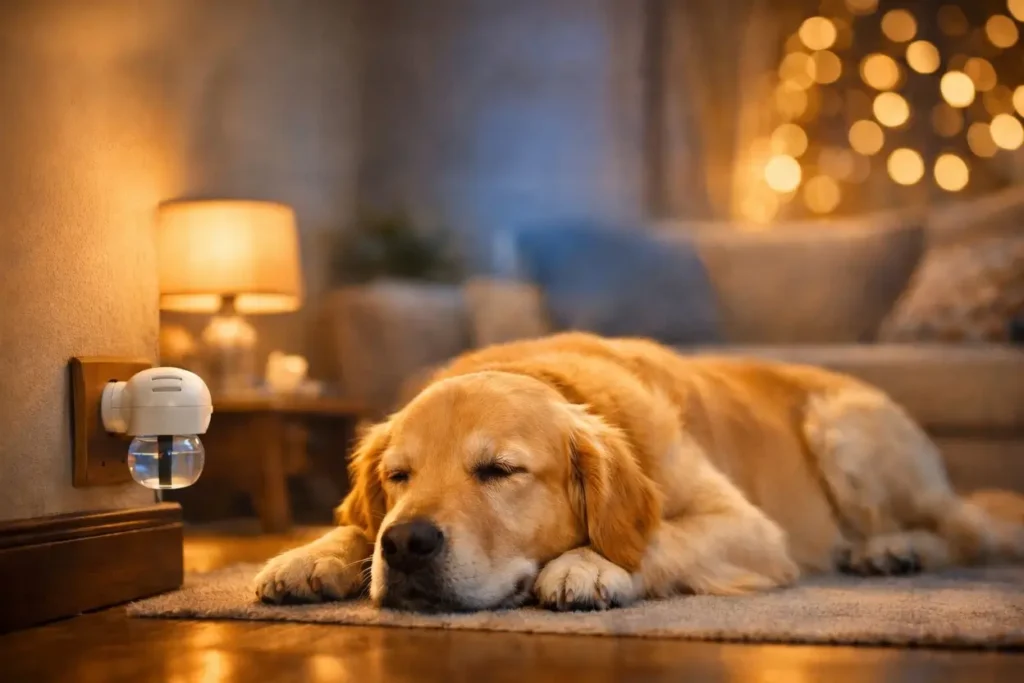
Picture this: It’s the Fourth of July, fireworks are booming outside, and your dog is trembling under the bed, panting like he just ran a marathon. You’ve tried everything — the thunder shirt, the soothing music, the reassuring cuddles — and nothing seems to work. Sound familiar? If you’ve ever felt helpless watching your dog spiral into anxiety, you’re not alone. That’s exactly where Dog Appeasing Pheromone (DAP) products come in — and they might just be the missing piece in your dog’s calm-down toolkit.
In this guide, I’ll walk you through everything you need to know about dog appeasing pheromones: what they are, how they work, what the science actually says, and how to use them effectively. No fluff, no false promises — just clear, honest information to help you make the best decision for your pup. 🐾
Key Takeaways
- 🧬 Dog Appeasing Pheromone is a synthetic copy of the natural calming pheromone produced by nursing mother dogs shortly after birth.
- 🐶 Puppies benefit most — clinical trials show DAP significantly reduces fear and anxiety in puppies aged 12–15 weeks during training.
- ⛈️ Thunderstorm anxiety is one of the adult dog scenarios with the most supportive (moderate) evidence for DAP use.
- 💊 DAP works best as part of a plan — it’s most effective when combined with behavioral training and other therapies, not used alone.
- 🕐 Give it time — most dogs show improvement within 7–14 days, with optimal results after about 4 weeks of consistent use.
What Is Dog Appeasing Pheromone and Where Does It Come From?
Let’s start at the very beginning, because understanding what DAP actually is makes everything else click into place.
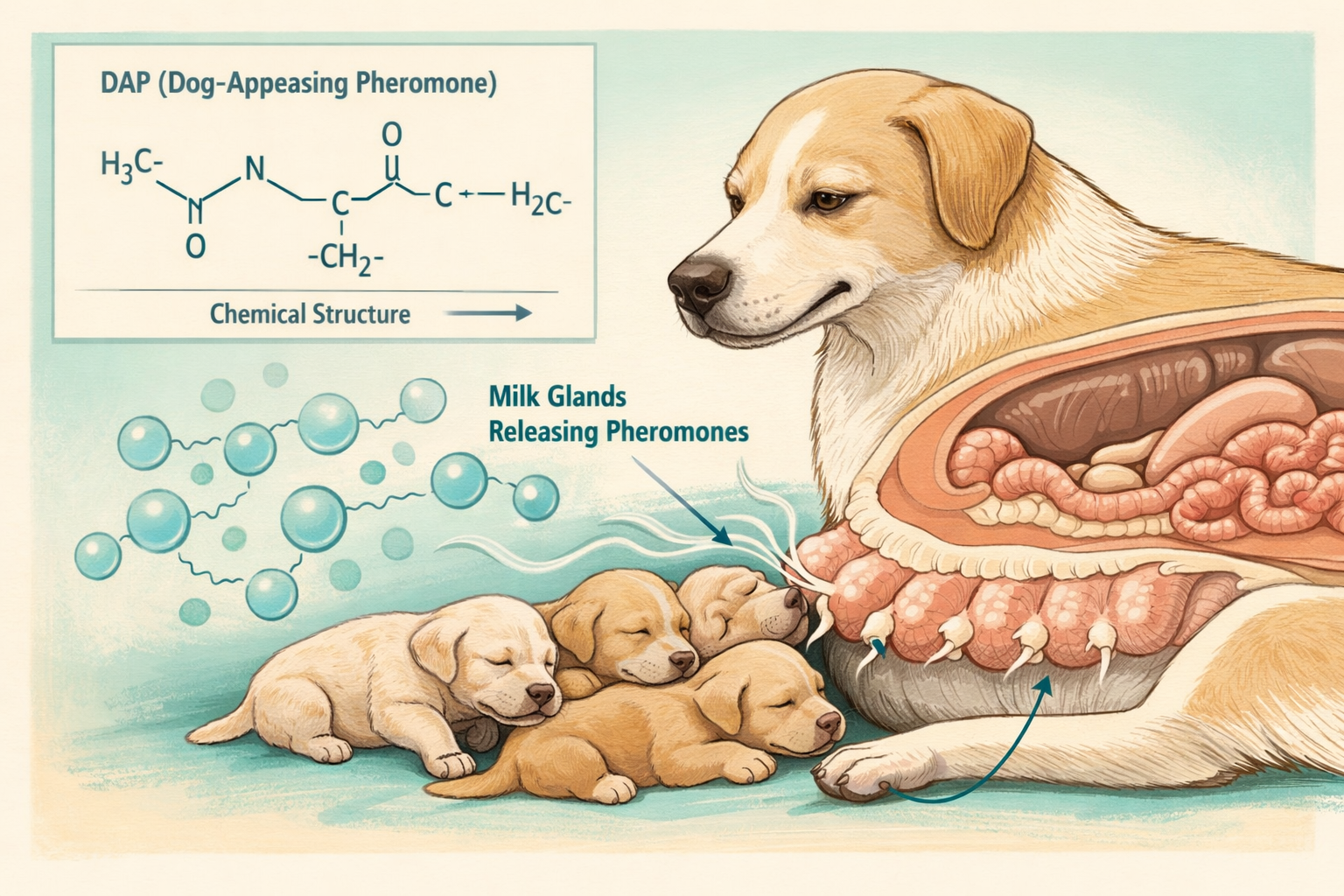
Dog Appeasing Pheromone is a synthetic version of the pheromone that lactating dogs naturally produce during the first three to five days after giving birth [5]. Think of it as nature’s built-in “everything is okay” signal. When a mother dog nurses her newborn puppies, she releases this chemical through the sebaceous glands in her mammary area. The puppies detect it and feel safe, secure, and calm — even in a brand-new, confusing world.
Scientists identified this natural compound and created a lab-made replica. That replica is what you’ll find in products like Adaptil (one of the most well-known DAP brands), sold as diffusers, sprays, collars, and chewable supplements.
💬 “It’s essentially bottling the feeling of being safe with mom — and making it available to dogs of any age.”
How Do Dogs Actually Detect Pheromones?
Dogs don’t smell pheromones the way they smell a cheeseburger. Instead, they detect them through a specialized organ called the vomeronasal organ (also called Jacobson’s organ), located in the roof of the mouth. This organ sends signals directly to the parts of the brain that control emotions and behavior — bypassing the thinking brain entirely. That’s why pheromones can trigger such fast, instinctive responses.
Interestingly, humans cannot detect dog pheromones. So don’t worry — your house won’t smell like anything unusual when you plug in a DAP diffuser. 😄
What Does the Science Say About Dog Appeasing Pheromone?
This is the section where I have to be completely honest with you, because the marketing around DAP products can sometimes outpace the actual research. Let’s look at what the studies really show.
The Evidence for Adult Dogs Is Weaker Than You Might Think
A peer-reviewed analysis that reviewed controlled trials found that the evidence for using DAP to manage stress behaviors in dogs over six months of age remains weak, with only 8 controlled trials examined [1]. That doesn’t mean DAP doesn’t work — it means we don’t yet have enough high-quality studies to say definitively that it does for adult dogs across the board.
The same review noted that true clinical benefit is undetermined, but importantly, DAP is unlikely to cause harm [1]. So it’s a low-risk option, even if the jury is still out on how effective it is for every adult dog.
Puppies? That’s a Different Story 🐕
Here’s where things get exciting. A randomized controlled trial specifically studying puppies aged 12–15 weeks found that DAP was significantly more effective than placebo in reducing fear and anxiety during training classes [2]. Puppies in the DAP group showed:
- Longer, more positive interactions with people and other dogs
- Reduced fear responses during class
- Improved long-term socialization outcomes
This is a big deal. The socialization window for puppies (roughly 3–14 weeks) is one of the most critical periods in a dog’s life. Anything that helps puppies feel safer and more confident during this time can have lasting positive effects on their temperament.
Thunderstorm Anxiety: Moderate Evidence 🌩️
If your dog turns into a trembling mess every time a storm rolls in, there’s actually moderate evidence that DAP can help reduce some of the behavioral signs of fear and anxiety triggered by thunderstorm noise [1]. This is one of the stronger use cases for DAP in adult dogs.
Shelter and Hospital Settings
Studies in shelter environments found mild evidence that DAP could reduce barking intensity and increase relaxation-associated behaviors in shelter dogs. There was also weak evidence supporting benefits for hospitalized dogs [1]. These are modest findings, but they suggest DAP may help dogs in high-stress institutional environments.
Summary Table: DAP Evidence by Use Case
| Situation | Evidence Strength | Notes |
|---|---|---|
| Puppies (12–15 weeks) in training | Strong | Significant improvement vs. placebo [2] |
| Thunderstorm anxiety | Moderate | Reduces behavioral fear signs [1] |
| Shelter dogs | Mild | Less barking, more relaxation [1] |
| Hospitalized dogs | Weak | Some benefit observed [1] |
| General adult dog anxiety | Weak | Undetermined clinical benefit [1] |
Types of Dog Appeasing Pheromone Products: Which One Is Right for Your Dog?
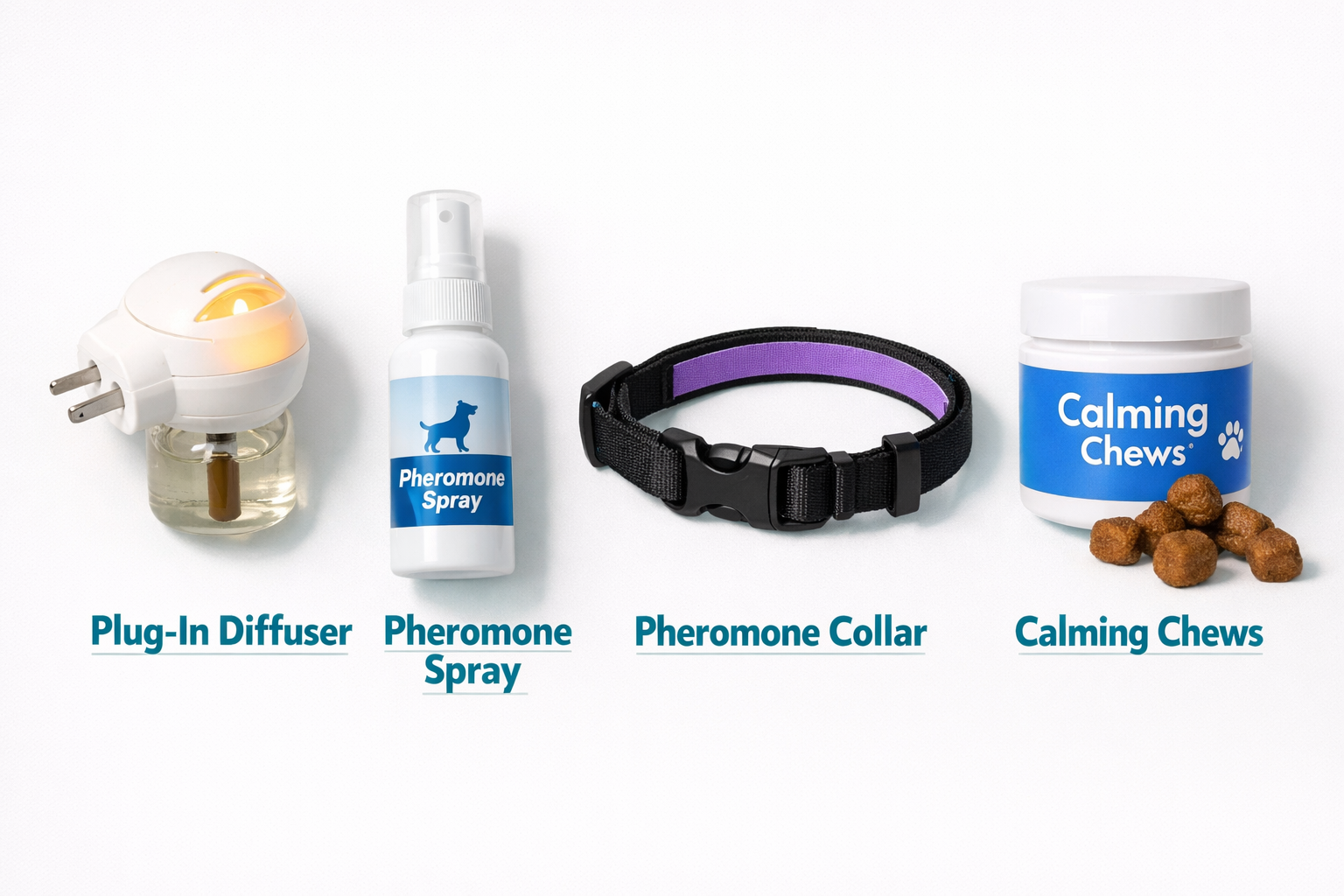
The good news is that dog appeasing pheromone products come in several formats, so you can choose based on your dog’s specific situation and lifestyle. Here’s a breakdown:
🔌 Diffusers
Diffusers are the most popular format — and for good reason. You simply plug them into a wall outlet, and they continuously release pheromones into the surrounding area (typically covering about 700 square feet). According to market data, the diffuser segment continues to dominate the market due to ease of use and the ability to create consistently calming environments [3].
Best for: Ongoing anxiety, separation anxiety, multi-dog households, general stress reduction at home.
Tip: Place the diffuser in the room where your dog spends the most time, and keep it away from air vents or drafts that could disperse the pheromones too quickly.
💨 Sprays
Sprays are great for targeted, on-the-spot calming. You can spritz them on a bandana, in your car, in a travel crate, or in a hotel room before your dog arrives. They’re fast-acting but shorter-lasting than diffusers.
Best for: Car travel, vet visits, short-term stressful events.
Tip: Spray the area 15 minutes before your dog is exposed to it — don’t spray directly on your dog’s face.
🦮 Collars
DAP collars are infused with pheromones and release them continuously as your dog wears the collar, warmed by their body heat. They’re particularly useful for dogs who experience anxiety in multiple environments.
Best for: Dogs with anxiety that follows them everywhere — outdoors, at the park, during walks.
🦴 Chewable Supplements
Some newer products combine synthetic pheromones with other calming ingredients (like L-theanine or melatonin) in chewable form. These are part of an emerging trend toward combination products that integrate pheromones with other calming agents [3].
Best for: Dogs who need extra support, or owners who prefer a treat-based approach.
How to Use Dog Appeasing Pheromone Effectively
Knowing how to use DAP correctly makes a huge difference in whether it works for your dog. Here are the most important things to keep in mind:
⏰ Give It Enough Time
This is probably the most common mistake people make. They try a DAP diffuser for a few days, see no dramatic change, and give up. But here’s the thing — most dogs show initial improvement within 7–14 days of continuous use, with optimal results typically appearing after 4 weeks [4].
Think of it like taking a daily vitamin. The benefits build up over time, not overnight.
🔄 Use It Consistently
DAP works best when it’s a constant presence in your dog’s environment, not something you pull out only during emergencies. Keep that diffuser plugged in. Replace it on schedule (most refills last about 30 days). Wear the collar continuously, not just during stressful events.
🧩 Combine It with Other Strategies
This is the most important point of all: DAP is not a magic bullet. Clinicians are advised to use DAP as part of a multimodal management plan rather than as a standalone treatment [1]. That means pairing it with:
- Behavioral training (desensitization, counter-conditioning)
- Environmental management (safe spaces, white noise machines)
- Veterinary guidance (especially for severe anxiety)
- Prescription medication if recommended by your vet
💬 “If you’re working with a tight budget, talk to your vet about priorities. DAP should not replace established therapies — it should support them.” [1]
📍 Placement Matters
For diffusers, placement is key. Don’t put it in a room your dog rarely visits, or near an open window where the pheromones will drift outside. The goal is to create a pheromone-rich zone in your dog’s primary living space.
Before and After: Real-World Scenarios Where DAP Can Help
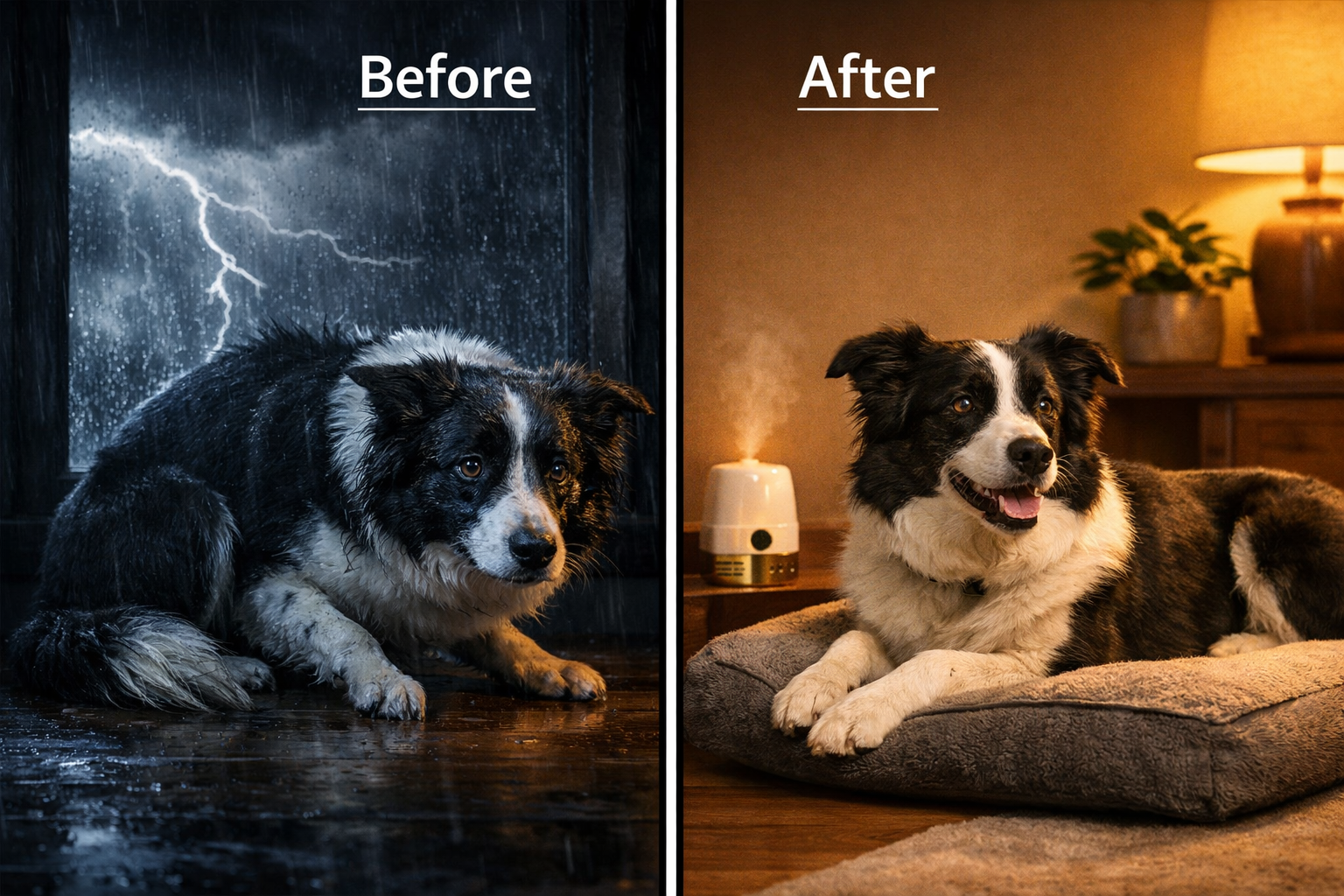
Let me paint a few pictures of how DAP might fit into everyday dog life. These aren’t clinical case studies — just realistic scenarios based on what the research supports.
Scenario 1: The New Puppy 🐾
You’ve just brought home an 8-week-old Lab mix. She’s adorable but terrified — crying at night, trembling during car rides, overwhelmed at puppy class. Plugging in a DAP diffuser in her sleeping area and using a DAP spray in her crate can help her feel safer during this critical socialization window. Combined with positive reinforcement training, this is one of the strongest use cases for DAP [2].
Scenario 2: The Storm-Phobic Spaniel ⛈️
Every time the weather turns, your Cocker Spaniel hides, shakes, and pants for hours. Running a DAP diffuser year-round — and giving an extra spritz of DAP spray on his bedding before a predicted storm — may help reduce the intensity of his fear response. This is one of the more evidence-supported uses for adult dogs [1].
Scenario 3: The Rescue Dog Adjusting to a New Home 🏠
Rescue dogs often come with unknown histories and significant anxiety. A DAP diffuser in their new home can help signal safety during the adjustment period. Pair it with a predictable routine, a designated safe space, and patient, reward-based training.
Scenario 4: The Vet Visit Dreader 🏥
Many dogs associate the vet’s office with stress and discomfort. Spraying a DAP spray in your car and on a bandana your dog wears to the appointment can take the edge off. Some progressive vet clinics even use DAP diffusers in their waiting rooms.
The Growing World of Dog Appeasing Pheromone Products
The fact that so many people are searching for solutions to dog anxiety isn’t just anecdotal — the market data backs it up. The pets appeasing pheromone market was estimated at $500 million as of 2025, with a projected compound annual growth rate (CAGR) of 7% between 2025 and 2033 [3]. That’s significant growth for a product category that didn’t even exist a few decades ago.
North America and Europe lead the way in DAP adoption, driven by high pet ownership rates, widespread veterinary awareness, and strong consumer education about pet anxiety [3]. But Asia-Pacific markets are growing rapidly as pet ownership rises and animal welfare awareness increases [3].
What’s Coming Next in DAP Technology?
The industry isn’t standing still. Here’s what’s on the horizon:
- 🔬 Combination products — pheromones blended with other calming agents like adaptogens, amino acids, or CBD
- 📦 Subscription refill services — so you never run out of your diffuser refills
- 🧬 Personalized formulations — products tailored to specific breeds or anxiety triggers
- 📱 Smart diffusers — connected devices that release pheromones on a schedule or in response to detected stress signals [3]
These innovations reflect a broader shift toward personalized pet wellness — treating each dog as an individual with unique needs rather than a one-size-fits-all approach.
When to Talk to Your Vet About Dog Appeasing Pheromone
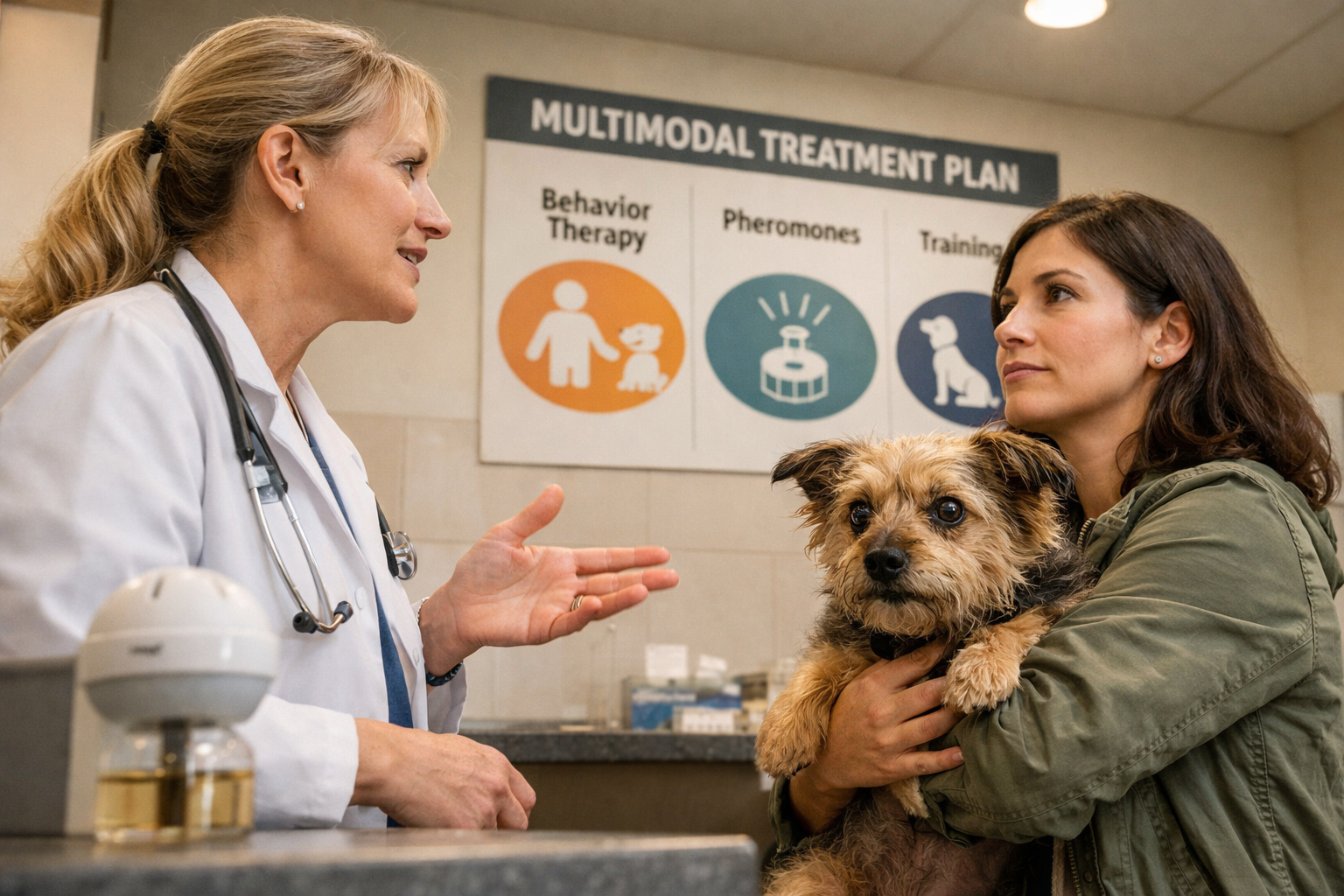
While DAP products are generally available over the counter and considered safe, there are situations where you absolutely should loop in your veterinarian:
✅ Your dog’s anxiety is severe — trembling, self-harm, destructive behavior, or aggression related to fear
✅ You’ve tried DAP for 4–6 weeks with no improvement
✅ Your dog has other health conditions that might be contributing to anxiety
✅ You’re considering combining DAP with prescription medications
✅ Your dog’s anxiety came on suddenly — this can sometimes signal an underlying medical issue
Your vet can also help you determine whether DAP is the right fit for your dog’s specific anxiety profile, or whether a different approach (like prescription anti-anxiety medication, a referral to a veterinary behaviorist, or a structured behavior modification program) might be more appropriate.
Remember: DAP should not be prioritized over other established therapies if you have limited financial resources [1]. Be upfront with your vet about your budget, and they can help you build the most effective plan within your means.
Questions to Ask Your Vet
- “Is DAP appropriate for my dog’s type of anxiety?”
- “Which format (diffuser, collar, spray) would work best for our situation?”
- “Should we combine DAP with behavioral training or medication?”
- “How will we measure whether it’s working?”
Common Myths About Dog Appeasing Pheromone
Let’s bust a few misconceptions that float around online:
❌ Myth: “DAP works instantly.”
✅ Reality: Most dogs need 7–14 days to show initial improvement, and 4 weeks for optimal results [4]. Patience is key.
❌ Myth: “DAP is a sedative.”
✅ Reality: DAP doesn’t sedate or drug your dog. It works by mimicking a natural signal — your dog still has full awareness and energy, just less anxiety.
❌ Myth: “If DAP doesn’t work, nothing will.”
✅ Reality: DAP is just one tool. If it doesn’t help on its own, that’s a sign your dog needs a more comprehensive multimodal plan [1].
❌ Myth: “DAP is only for puppies.”
✅ Reality: While the strongest evidence is for puppies [2], DAP can still benefit adult dogs — especially for thunderstorm anxiety and shelter situations [1].
❌ Myth: “All DAP products are the same.”
✅ Reality: Quality, concentration, and delivery method vary between brands. Look for products that have been tested in clinical settings.
Conclusion: Your Next Steps Toward a Calmer Dog
If you’ve made it this far, you now know more about Dog Appeasing Pheromone than most dog owners — and probably more than a few pet store employees. Here’s the bottom line:
DAP is a safe, low-risk option that can genuinely help certain dogs in certain situations — especially puppies during socialization, dogs with thunderstorm anxiety, and dogs in high-stress environments like shelters. For adult dogs with general anxiety, the evidence is weaker, but the risk of trying it is minimal.
The key is to approach it with realistic expectations and use it as part of a bigger plan — not as a standalone fix.
🐾 Your Action Plan
- Identify your dog’s specific anxiety triggers — thunderstorms, separation, strangers, travel?
- Choose the right DAP format — diffuser for home, spray for travel, collar for on-the-go anxiety.
- Start consistently and give it time — commit to at least 4 weeks of continuous use.
- Pair it with training — positive reinforcement, desensitization, and safe spaces amplify results.
- Check in with your vet — especially if anxiety is severe or DAP alone isn’t cutting it.
Your dog deserves to feel safe and calm in their world. DAP might not be a miracle cure, but used correctly, it can be a meaningful piece of the puzzle. 🐶💙
References
[1] veterinaryevidence – https://veterinaryevidence.org/index.php/ve/article/view/421
[2] Effects Of Dog Appeasing Pheromones On Anxiety And Fear In Puppies During Training And On Long Term Socialization – https://caninewelfare.centers.purdue.edu/resource/effects-of-dog-appeasing-pheromones-on-anxiety-and-fear-in-puppies-during-training-and-on-long-term-socialization/
[3] Pets Appeasing Pheromone 1909603 – https://www.datainsightsmarket.com/reports/pets-appeasing-pheromone-1909603
[4] Pet Mental Health 2026 High Tech Calming Gadgets For Anxious Dogs And Cats Post Holidays – https://www.pawvortex.com/blogs/the-paw-guide/pet-mental-health-2026-high-tech-calming-gadgets-for-anxious-dogs-and-cats-post-holidays
[5] Dog Appeasing Pheromone What The Clinical Research Actually Shows – https://omni.pet/blogs/news/dog-appeasing-pheromone-what-the-clinical-research-actually-shows